 English
 中文简体
中文简体Industry News
HOME / BLOG / Industry News / Types of Condensers for Refrigeration: Wire Tube, Tube on Plate, and Built-in Options




When a refrigeration cabinet starts running warm, the first thing a technician checks is often the condenser. The condenser carries away the heat that the compressor pulls from the inside of the cabinet, and its design has a direct impact on energy consumption, noise, and long-term reliability. For appliance manufacturers and importers, choosing the wrong condenser type can lead to longer pull-down times, higher material costs, and warranty claims that eat into margins. Here is a practical look at the condenser designs used in household and commercial refrigeration equipment.
Content
All refrigeration systems follow the same loop. The compressor raises refrigerant pressure, the condenser rejects heat, the expansion device lowers pressure, and the evaporator absorbs heat from the cabinet interior. The condenser is the component that sheds the heat. In real procurement terms, condenser selection comes down to three factors: how much heat must be rejected, how much space is available, and how much airflow the cabinet can provide.
Unlike a laboratory glass condenser, the condensers used in refrigerators and freezers are part of the structural and thermal balance of the appliance. They must withstand vibration, moisture, and repeated start-stop cycles. They also need to be built to tight tolerances so that a production line can produce consistent units at a predictable cost.
In household and commercial refrigeration, nearly all systems use air-cooled condensers. Water-cooled and evaporative condensers are reserved for industrial plants or large central chiller systems. The designs we discuss here all fall into the air-cooled category, but they differ significantly in construction, cost, and application.
Condensers are often grouped by how air moves across them.
In many household designs, a condenser that appears to be "free-air" is actually assisted by cabinet airflow. The manufacturer must balance the coil area against both the compressor capacity and the available surrounding space.
The wire tube condenser is the workhorse of domestic refrigeration. It consists of a serpentine steel tube with steel wire reinforcement welded on one or both sides. The wire adds structural rigidity and increases the heat transfer surface. In a single-layer design, the wires are welded on one side. In a multilayer design, the tube is wound back and forth, with wires bridging multiple passes, which gives the multilayer condenser more heat transfer area in the same footprint.
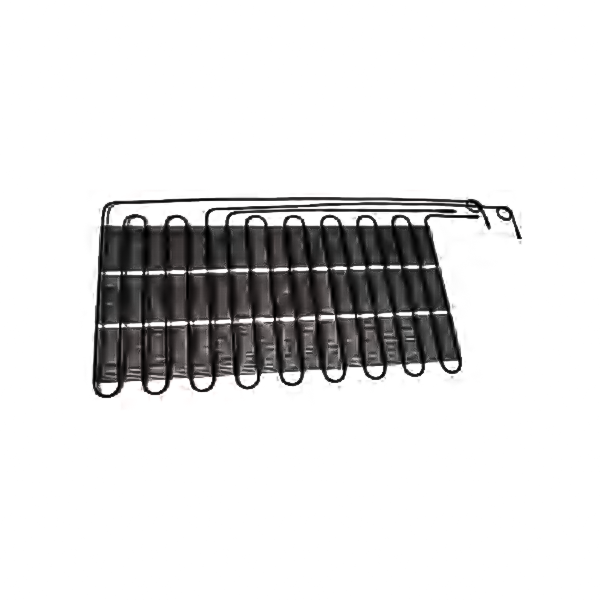 Single-Layer Wire Tube Condenser for Compact RefrigerationThis single-layer wire tube condenser features electrophoresis coating for corrosion resistance and meets R134a CFC cleanliness standards. Its compact design suits small refrigerators and minibars, offering economical cooling with reliable welding quality.View Product →
Single-layer wire tube condensers are commonly used in small refrigerators, minibars, and water dispensers. They are compact, lightweight, and economical. Multilayer versions suit larger cabinets and low-temperature applications, where the extra surface area reduces required compressor run time. A typical production challenge is maintaining consistent weld quality. Poor welds create loose fins, thermal voids, and eventually refrigerant leaks.
In a tube on plate condenser, the refrigerant tube is welded directly onto a steel plate, and the plate is usually coated with powder coat to improve heat transfer. The plate provides structural support and distributes heat across a wide area. This design is common in upright freezers, display cabinets, and some beverage coolers.
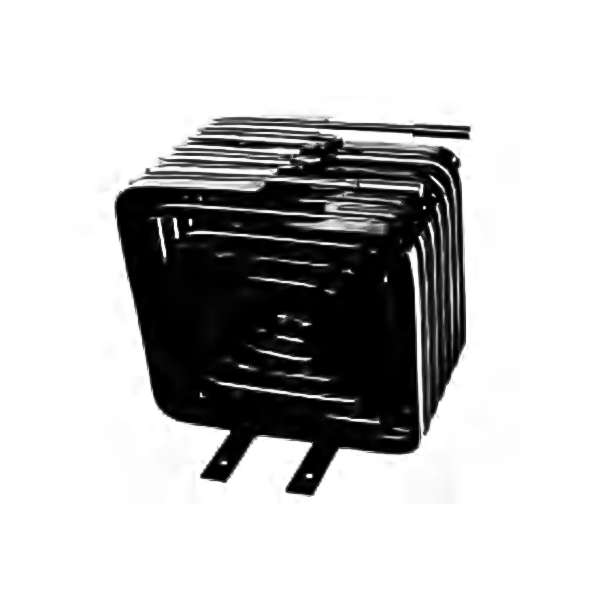 Tube on Plate Condenser with Powder Coated Steel PlateThis tube on plate condenser provides robust construction and efficient heat distribution across a wide surface. It is suitable for upright freezers and display cabinets, with electrophoresis coating to prevent corrosion.View Product →
The main advantage of tube on plate construction is robustness. The plate protects the tube from mechanical damage, and the large flat surface can be mounted flush on the back wall of an appliance. However, tube on plate condensers require more material and perform best when the back of the cabinet has enough open surface to shed heat.
For a deeper technical comparison, you can read our overview of how tube on plate condensers differ from other configurations.
The window blind condenser is a tube on plate variant where the plate is cut into horizontal slats. This creates a large surface area for heat exchange while allowing air to pass through the structure. The slats resemble window blinds, hence the name. This design is often used in chest freezers and commercial display units, where the condenser must handle large heat loads without a fan.
Because the slat geometry increases the surface area, the window blind condenser can often work as a natural convection unit in cabinets where a flat tube on plate design would need a fan. It is also a robust choice for units installed outdoors or in dusty environments, because the open slats are less likely to collect debris than a tightly packed wire coil.
Rotary wing condensers get their name from the arrangement of the tube and plate structure around a central axis. They are a specialized design used in certain commercial refrigeration units, where they pack more tube length into a compact footprint. The rotating blade-like geometry also creates a better natural convection path, which helps the condenser shed heat in free-air installations.
Compared with a standard flat tube on plate design, the rotary wing configuration is more involved to manufacture and is usually chosen when space constraints are tight and the compressor capacity is relatively high. For a manufacturer with experience in this type, it is a valuable option for OEM projects that require a custom heat exchanger.
Built-in condensers are mounted on the inner wall or the back of the refrigerator cabinet, with the refrigeration tube held in contact with the metal liner. Heat transfers through the cabinet wall and dissipates from the outside. This construction avoids exposed coils at the rear, which lowers shipping damage risk and makes the appliance easier to clean.
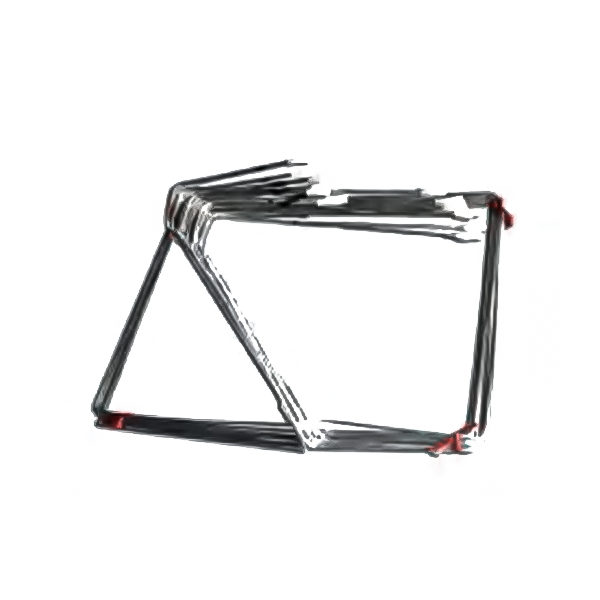 Built-in Condenser for Internal Cabinet MountingThis built-in condenser is designed for mounting inside the cabinet, with galvanized or painted PVC surface. It ensures clean inner tubes for R134a systems and facilitates heat dissipation through the wall, reducing external coil damage risks.View Product →
Built-in condensers are common in premium household refrigerators and compact units where rear clearance is limited. The critical issue here is the quality of contact between the tube and the liner. Gaps or air pockets create hotspots that raise refrigerant discharge pressure and reduce efficiency. Tight manufacturing control of the tube-stick process is therefore essential.
| Type | Typical Applications | Key Advantage | Key Consideration |
|---|---|---|---|
| Wire tube, single layer | Small refrigerators, water dispensers | Compact, low cost | Limited heat transfer area |
| Wire tube, multilayer | Larger cabinets, freezers | More surface area in same footprint | More tube may increase cost |
| Tube on plate | Upright freezers, display cabinets | Robust, large flat surface | Requires open back wall |
| Window blind | Chest freezers, commercial displays | Good airflow through plate | More fabrication steps |
| Rotary wing | Specialized commercial units | Compact heat transfer | Complex manufacturing |
| Built-in / inside | Premium home refrigerators | Clean appearance, low shipping damage | Requires precise tube-liner contact |
Start with the compressor displacement and the design pull-down time. The condenser must be able to reject the total heat load at the highest ambient temperature the appliance will face. If the unit is likely to operate in a hot kitchen or a warehouse near a doorway, choose a condenser with more surface area or a forced-air design.
If you are an appliance brand that has experience with one design, moving to another configuration can affect not only the cost of the condenser itself but also the compressor, the evaporator, and the cabinetry. That is why engineering teams usually validate a new condenser on a prototype before committing to a full production run.
Condenser cleanliness is a common cause of premature failure in refrigeration systems. Dust, grease, and paper debris blocked in the coil act as insulation and raise the condensing pressure. High pressure makes the compressor work harder, reduces the amount of refrigerant that flows through the evaporator, and can eventually trip the overload protector.
For wire tube condensers mounted at the back of a cabinet, technicians should vacuum the coil at least twice a year and straighten bent fins with a fin comb. For built-in condensers, debris can accumulate between the cabinet wall and the kitchen counter, so the appliance should be pulled out and cleaned thoroughly.
For an equipment provider, the best time to address these issues is during the design phase. By selecting a coil with enough surface area, you give the appliance a safety margin that keeps the system running even when the condenser is less than spotless.
For practical insight into how condenser maintenance affects efficiency and service life, see our article on practical insights into refrigerator condensers maintenance and efficiency.
Your email address will not be published. Required field are marked*

No.380 Kangyang Rd in the north,HuangdaiTown,Xiangcheng District,Suzhou City,215143

0512-65481378


