 English
 中文简体
中文简体Industry News
HOME / BLOG / Industry News / Aluminum Fin Tube Applications in HVAC and Refrigeration: A Practical Guide




When an OEM engineering team sits down to select heat exchangers for a new line of refrigerated display cabinets, the conversation rarely starts with laboratory efficiency curves. It starts with a practical question: which fin tube construction will meet the capacity target, fit the cabinet envelope, survive years of condensation and cleaning cycles, and still keep the unit cost within budget. Aluminum fin tube heat exchangers answer that question across a wide range of HVAC and refrigeration products because they balance thermal performance, weight, and cost better than most alternatives. This guide walks through the main aluminum fin tube applications, the design decisions that separate reliable coils from problem coils, and the supplier checks that matter before you commit to a production order.
Content
The job of any fin tube heat exchanger is to move heat between refrigerant and air. The tube carries the refrigerant, the fins multiply the surface area available for air contact, and the bond between the two determines how efficiently heat crosses the interface. Aluminum is used for both elements because the metal offers strong thermal conductivity, low density, natural corrosion resistance, and a mature supply chain for tube and fin production.
Aluminum construction also reduces shipping weight, which matters for ceiling-mounted fan coil units and for manufacturers who freight large quantities of coils to assembly plants. When the tube and fin are both aluminum, galvanic corrosion between dissimilar metals disappears, and the coil can be recycled at the end of its service life.
Refrigeration equipment uses aluminum fin tube heat exchangers primarily in two roles: evaporators that absorb heat from the refrigerated space, and condensers that reject heat to the surrounding air. The same fin-and-tube construction appears in both, but the operating conditions and design targets differ.
In static cooling systems, the evaporator relies on natural air movement across the finned surface. In fan-assisted units, forced airflow pulls air through the coil, allowing a more compact envelope for the same capacity. Aluminum tube fin evaporators are widely selected for these roles because the tube and fin materials can be matched to the refrigerant and the operating temperature range. Suzhou Yikangda builds fin-type evaporators with aluminum tubes for exactly these applications, and the aluminum tube fin evaporator range covers the capacities used in domestic and commercial refrigeration equipment.
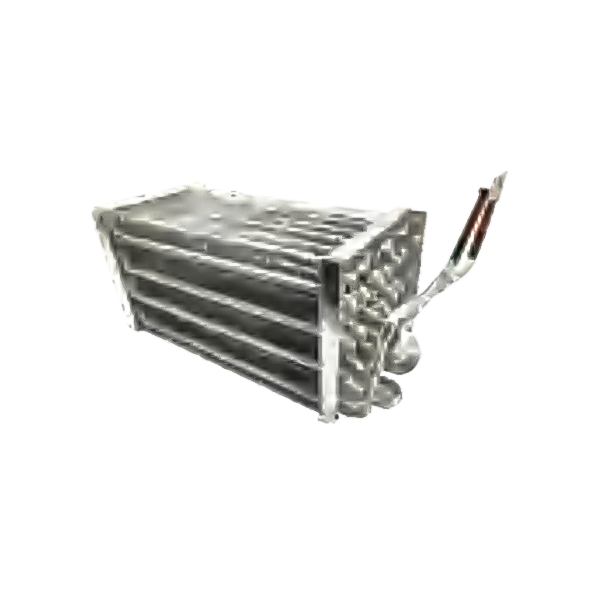 126 Fin Type Evaporator(Aluminum Tube) Suppliers, Company - Suzhou Yikangda ElecYikangda is China 126 Fin Type Evaporator(Aluminum Tube) Suppliers and Company, Wholesale 126 Fin Type Evaporator(Aluminum Tube) online, ...View Product →
Condensers in self-contained cabinets and small condensing units often use wire-on-tube or tube-on-plate construction, but fin-and-tube condensers with aluminum fins become attractive when heat rejection requirements rise. The fins multiply the surface area available for natural or forced convection, which keeps condensing temperature within the design range even when ambient temperatures climb.
HVAC equipment places aluminum fin tube coils in spaces where people live, work, and shop, so noise, weight, and condensate handling matter as much as capacity.
Fan coil units use chilled water or refrigerant to cool indoor air. The coil must handle condensation, air-side pressure drop, and frequent on-off operation. Aluminum fins with properly formed collars deliver good heat transfer while keeping the coil light enough for ceiling-mounted and wall-mounted units. Air handlers add the requirement of larger face areas and multiple row depths, which demands consistent fin alignment and uniform tube expansion.
Outdoor units face rain, temperature swings, and airborne dirt throughout the year. Aluminum fins resist corrosion in most environments, and protective coatings extend service life in coastal or industrial areas. Copper tubes with aluminum fins remain common in split-system condensers, while all-aluminum constructions appear where weight reduction and material cost are the deciding factors.
Fin spacing, fin thickness, tube diameter, and circuit arrangement all influence capacity, air-side pressure drop, and frost behavior. These parameters should be specified clearly rather than left to guesswork.
| Application | Typical Fin Spacing | Critical Concern |
|---|---|---|
| Freezer evaporator | 4-8 mm | Frost accumulation and defrost efficiency |
| Display case evaporator | 3-6 mm | Airflow uniformity and temperature stability |
| Remote condenser | 2-4 mm | Dust loading and cleaning access |
| Fan coil cooling coil | 2-3 mm | Condensate drainage and moisture carryover |
Fin louver geometry and tube pattern also affect performance. Louvered fins improve air-side heat transfer but collect dust more quickly; flat fins are easier to clean but require a larger face area for the same capacity. A component buyer should confirm which fin design the manufacturer offers as standard before assuming the catalog performance number will hold in a dirty real-world environment.
When a production line consumes hundreds of heat exchangers per month, batch-to-batch consistency matters more than the quality of a single sample. Verify that the supplier operates under ISO 9001 process control, that raw aluminum tubing and fin stock come from documented sources, and that fin bond quality is inspected at defined intervals. A manufacturer whose core business is refrigeration evaporators and condensers should be able to show processes for tube expansion, fin stamping, leak testing, and internal cleaning.
Ask specifically about material traceability and how the supplier prevents internal tube contamination before assembly. The fin-type evaporator design and selection guide at this site explains the specification decisions in more detail, and the refrigerator condenser maintenance practices article is useful when planning after-sales support and spare parts strategy.
Selection comes down to a short sequence of engineering and procurement decisions. The order below works for most refrigeration and HVAC applications.
One example shows why these steps matter. A freezer evaporator operating below 0°C accumulates frost, so very tight fin spacing becomes a risk. A display case evaporator designed for condensate removal needs a fin pitch and coil angle that allow water to drain. These small decisions separate reliable equipment from a service burden. For a direct match to this type of requirement, Suzhou Yikangda offers aluminum fin evaporator models intended for refrigeration cabinets and similar cooling duty.
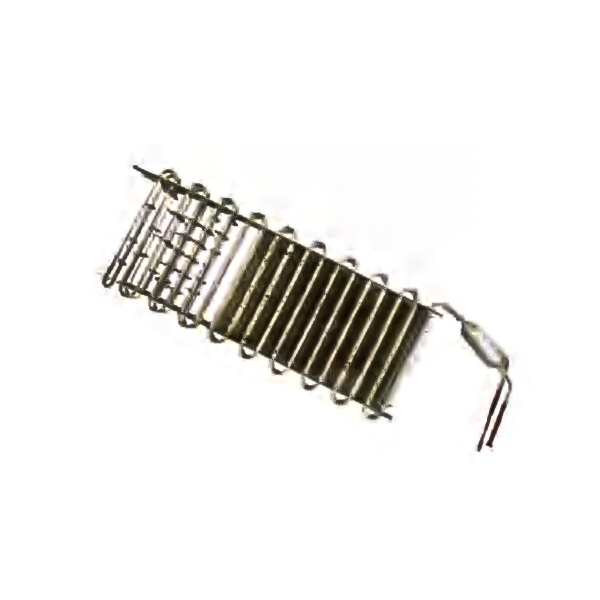 130 Fin Type Evaporator(Aluminum Tube) Suppliers, Company - Suzhou Yikangda ElecYikangda is China 130 Fin Type Evaporator(Aluminum Tube) Suppliers and Company, Wholesale 130 Fin Type Evaporator(Aluminum Tube) online, ...View Product →
Aluminum fin tube heat exchangers hold their position in HVAC and refrigeration because they combine cost, weight, and thermal performance in one component family. The material choice alone does not guarantee success. Specifying the right fin geometry, confirming the manufacturing process, and working with a supplier whose core business is evaporators and condensers are the factors that produce a heat exchanger with years of reliable service ahead of it.
Your email address will not be published. Required field are marked*

No.380 Kangyang Rd in the north,HuangdaiTown,Xiangcheng District,Suzhou City,215143

0512-65481378


