 English
 中文简体
中文简体Industry News
HOME / BLOG / Industry News / Wire Condenser Meaning, Types, and Selection Guide for Industrial Refrigeration




Content
When a maintenance supervisor opens a bill of materials for a refrigerator line and sees "wire condenser," the part number refers to a wire-and-tube heat exchanger, not to the electrical cable that powers a fan. In the appliance component industry, a wire condenser is a specific type of air-cooled condenser built from a serpentine tube and a set of welded steel wires. On HVAC forums, the same phrase is sometimes used as shorthand for condenser fan motor wiring, but that is a different topic. This article covers the component itself: how it is built, how it compares with other condenser designs, and what to verify before you place a purchase order. The design is also called a wire-and-tube condenser or a wire-on-tube condenser.
From our experience as a condenser manufacturer in Suzhou, most ordering disputes happen when the engineering drawing does not clearly state whether the requirement is a single-layer wire tube condenser or a multilayer assembly. Naming the correct type early avoids rework and unnecessary lead time.
Hot refrigerant vapor from the compressor enters the inlet of the serpentine tube. As it travels along the tube, the surrounding air absorbs heat, the vapor condenses into liquid, and the liquid refrigerant exits toward the expansion device. The steel wires welded across the tube act as fins: they enlarge the outside surface area so more heat can be rejected in a given space.
Wire condensers are widely used in household refrigerators, freezers, display cabinets, and water dispensers because they are compact, lightweight, and effective under natural convection. A black paint or protective coating is usually applied to the outer surface to reduce corrosion and improve heat radiation.
Wire-tube is not the only way to build a static condenser. The table below compares the most common constructions used in refrigeration equipment.
| Type | Construction | Typical Application | Main Advantage |
|---|---|---|---|
| Wire tube | Serpentine tube with welded steel wire grid | Refrigerators, freezers, display cabinets | Compact, large surface area, good natural convection |
| Tube-on-plate | Tube bonded to a steel plate | Back of household refrigerators | Robust and low-cost, easy to mount |
| Window blind | Tube-on-plate with louvered or slotted panel | Free-standing refrigerators | Better airflow through the panel |
| Rotary wing | Shaped wing-like tubes | Special cabinet designs | Compact envelope in specific layouts |
| Built-in | Condenser hidden inside the cabinet wall | Built-in or integrated refrigerators | Clean exterior and smaller footprint |
Within these categories, the wire tube design offers the best balance of material cost and heat rejection for typical refrigerator platforms. If your product uses a back plate for mounting, the differences between a wire tube and a tube-on-plate arrangement matter; our article on how a tube-on-plate condenser differs from a wire tube condenser explains that decision in more detail.
Single-layer units have one serpentine tube plane. They are suitable for compact refrigerators and small freezers where the available rear panel is limited. For a typical small refrigerator, a single-layer wire tube condenser keeps the assembly thin and simplifies mounting.
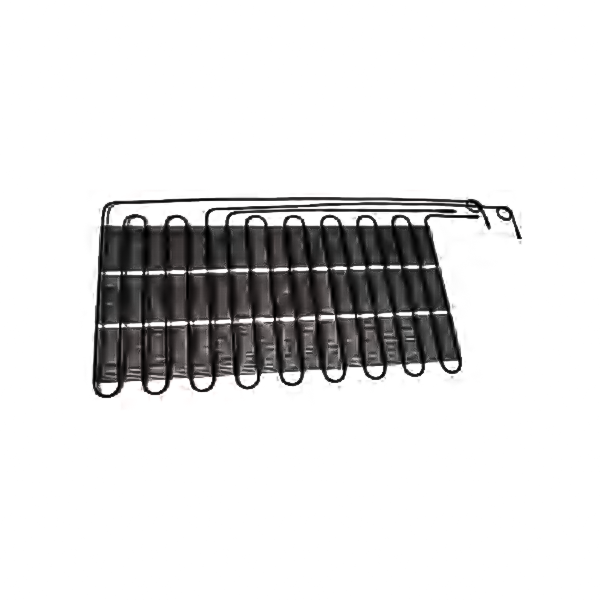 001 Wire Tube Condenser (single layer) Suppliers, Company - Suzhou Yikangda ElecYikangda is China 001 Wire Tube Condenser (single layer) Suppliers and Company, Wholesale 001 Wire Tube Condenser (single layer) online, ...View Product →
Multilayer units stack two or more rows of tubes in depth, which gives more tube route length in a smaller frontal area. This is a common solution for tall freezers and commercial display cabinets. When the heat load is higher, the multilayer wire tube condenser increases the total rejection surface without making the appliance much wider. The decision is not simply about surface area; it affects the compressor's discharge pressure and the energy consumption of the whole appliance.
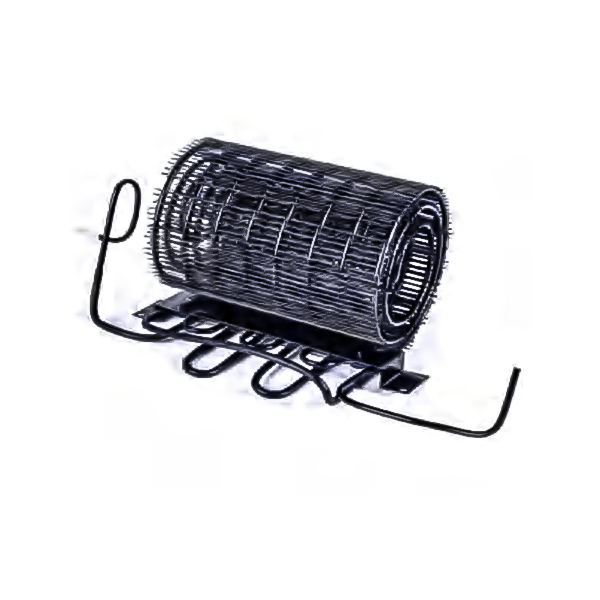 030 Wire Tube Condenser(Multilayer) Suppliers, Company - Suzhou Yikangda ElectriYikangda is China 030 Wire Tube Condenser(Multilayer) Suppliers and Company, Wholesale 030 Wire Tube Condenser(Multilayer) online, Perfor...View Product →
Wire condensers look simple, but the wrong specification can cause poor cooling or a leak in the field. Review these points before sending the drawing to the factory:
In our experience, the most common mistake is selecting a multilayer part when the airflow path is shallow, or specifying a large-diameter tube for a low charge system and ending up with excessive internal volume. Sharing the complete cabinet envelope with your supplier is the fastest way to avoid these problems. These checks are part of the ISO 9001 process we follow on every wire condenser lot. Our engineers can adapt existing tooling when a customer needs a different wire spacing, mounting bracket, or connection orientation.
Even a well-built wire condenser loses efficiency when the wire surface becomes covered with dust, grease, or paper fibers from the appliance environment. Natural convection systems rely on clean air passage, so the condenser location must allow airflow from bottom to top and keep the rear grille unobstructed. For real-world service guidance, the practical insights into refrigerator condenser maintenance and efficiency provide a useful checklist for inspection and cleaning.
A wire condenser should also be positioned so that the heated air does not recirculate into the compressor compartment. If the installation relies on a fan, keep the fan blade clear of the wire ends and check that the airflow direction matches the condenser design. On the design side, the condenser is only half of the heat-transfer loop. The evaporator must also match the compressor and the cabinet load. If you are selecting a new evaporator for the same project, read the fin-type evaporator design and selection guide before finalizing the components.
Some visitors arrive at this article after searching for "wire condenser" because they want to connect the fan motor on an air-conditioning condenser. That is a different task. The wiring of a condenser fan motor involves high voltage, a run capacitor, and often a contactor; the motor has either three or four wires depending on the design. We do not provide electrical wiring instructions, because each appliance must follow the original equipment manufacturer's diagram and local safety codes. If that is what you need, look for the wiring diagram on the unit's nameplate or in the service manual.
Since 1992, our factory in Suzhou has produced wire tube condensers and evaporators for refrigerators, freezers, display cabinets, coolers, and water dispensers. We work with appliance manufacturers and distributors across China, the United States, Europe, Southeast Asia, the Middle East, South America, and North America. Because we control the full manufacturing process, we can deliver consistent leak-tested parts and adapt the wire platform to your cabinet dimensions.
Before sending your RFQ, prepare the mounting dimensions, heat load, refrigerant type, and annual quantity. That information allows our engineers to recommend a single-layer or multilayer configuration rather than making you match a catalog number blindly. For prototype orders, we recommend starting with a sample lot of 20 to 50 pieces to verify fit, brazing compatibility, and heat performance before mass production.
Your email address will not be published. Required field are marked*

No.380 Kangyang Rd in the north,HuangdaiTown,Xiangcheng District,Suzhou City,215143

0512-65481378


