 English
 中文简体
中文简体Industry News
HOME / BLOG / Industry News / Do wire tube evaporators affect the energy efficiency of refrigerators?




Content
Wire tube evaporators are among the most widely used evaporator types in household and commercial refrigerators. Their simple construction, strong durability, and excellent heat dissipation performance make them a preferred choice for many global manufacturers. When discussing refrigerator energy efficiency, the evaporator design is a crucial factor. Because cooling performance, heat exchange rate, and even compressor workload are directly influenced by the evaporator’s efficiency, evaluating how wire tube evaporators impact overall energy consumption is essential.
This article explores the structural characteristics of wire tube evaporators, how they influence cooling performance, and how they shape the energy efficiency profile of both domestic and commercial refrigeration systems. The discussion combines engineering principles with real-world usage scenarios to provide a practical understanding for consumers, manufacturers, and HVAC professionals.
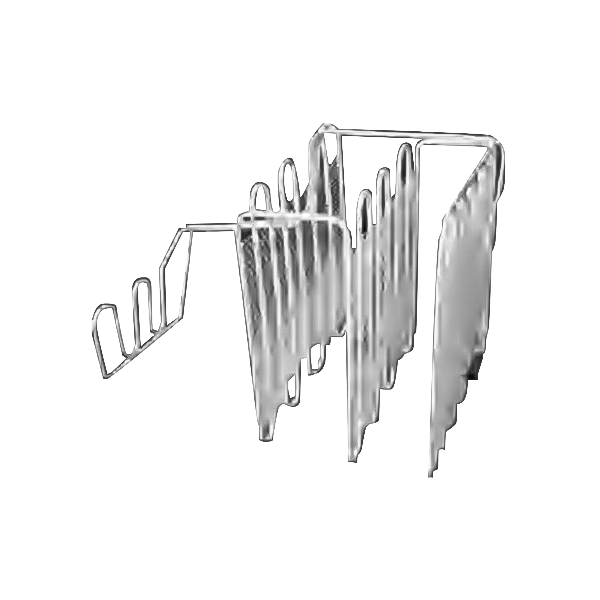
A wire tube evaporator typically consists of a steel tube that carries refrigerant and steel wire supports welded around the coil. This creates an integrated structure with a large surface area for heat exchange. When refrigerant evaporates inside the tube, it absorbs heat from the refrigerator interior, lowering the temperature of the storage compartments.
These advantages enable wire tube evaporators to sustain consistent cooling performance over many years, which indirectly contributes to better energy efficiency by preventing the system from overworking.
The energy efficiency of a refrigerator depends on how effectively the evaporator absorbs heat and maintains stable temperatures. When heat exchange is efficient, the compressor runs less often, directly reducing electricity consumption. Wire tube evaporators contribute to this efficiency through several mechanisms that relate to airflow, thermal conductivity, and refrigerant behavior.
A high-performance evaporator reduces the time and frequency of compressor cycles. When refrigerant evaporates quickly and fully, the system does not need to compensate for uneven temperatures or slow cooling. Wire tube evaporators often enable faster heat removal due to their expanded surface area, which helps maintain uniform evaporating temperatures and prevents the compressor from overcompensating.
| Evaporator Type | Heat Exchange Level | Energy Efficiency Impact |
| Wire Tube | Moderate to High | Consistently strong due to natural airflow |
| Aluminum Roll Bond | High but enclosed | Efficient but airflow may be limited |
| Fin Coil | Very High | Excellent but more expensive |
While wire tube evaporators may not always match the peak performance of fin coil structures, their durability, airflow advantages, and cost-efficiency create a strong balance that supports long-term energy savings.
Frost buildup on evaporators reduces heat exchange efficiency because ice acts as an insulating layer. Wire tube evaporators tend to have lower frost accumulation thanks to their open structure and greater airflow. Less frost means less frequent defrost cycles, allowing the refrigerator to maintain stable energy consumption.
While wire tube evaporators are already efficient in their basic structure, several design improvements can further improve refrigerator performance. Manufacturers commonly enhance evaporator systems through optimized tubing patterns, material upgrades, and improved airflow management.
The tubes and wires are usually made of steel, but surface treatments such as electrophoresis and powder coatings help prevent corrosion. Corrosion-resistant evaporators maintain thermal conductivity over a longer period, ensuring that energy efficiency does not deteriorate as the appliance ages.
Manufacturers often design tubing patterns that maximize refrigerant contact with interior surfaces. Optimized spacing between wire support structures also ensures balanced airflow distribution. Both factors help the evaporator remove heat more uniformly, improving temperature consistency and lowering energy consumption.
Many wire tube evaporators are positioned externally on the back of the refrigerator, benefiting from natural convection. This open placement enhances heat rejection without requiring fans or additional energy-consuming components.
In real-world applications, wire tube evaporators provide an excellent balance of cooling performance, durability, and energy efficiency. They deliver reliable long-term performance, rarely suffer degradation, and maintain stable heat exchange rates throughout the appliance’s lifespan. This makes them a popular choice in refrigerators designed for affordable yet efficient energy use.
For households, wire tube evaporators help limit energy bills by supporting consistent cooling that requires fewer compressor cycles. For manufacturers, they offer a cost-effective solution that meets energy efficiency standards required in international markets.
Wire tube evaporators do indeed affect the energy efficiency of refrigerators—and generally in a positive way. Their open structure, strong thermal performance, low frost buildup, and natural convection properties contribute to reduced compressor workload and lower long-term energy consumption. While other advanced evaporator designs may offer higher peak performance, wire tube evaporators provide a proven and cost-effective balance that supports efficient refrigeration for both residential and commercial use.
Your email address will not be published. Required field are marked*

No.380 Kangyang Rd in the north,HuangdaiTown,Xiangcheng District,Suzhou City,215143

0512-65481378


