 English
 中文简体
中文简体Industry News
HOME / BLOG / Industry News / Are Tube On Plate Condensers energy-saving and environmentally friendly?




Content
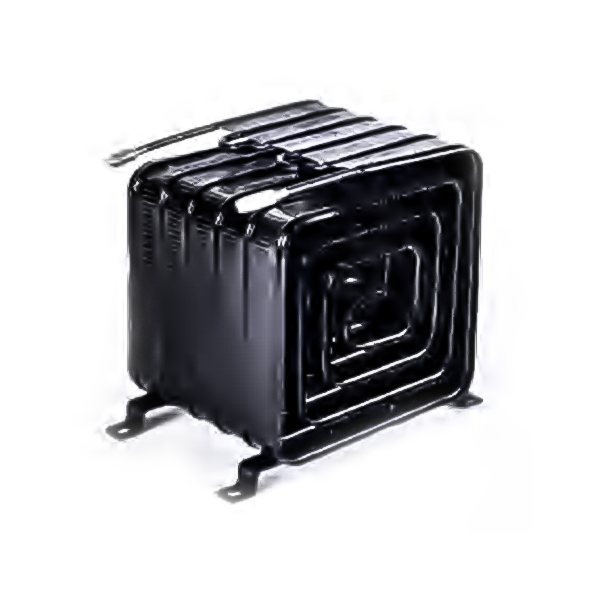
Tube On Plate Condensers are increasingly recognized for their efficiency advantages in industrial cooling and refrigeration systems. Their structure, featuring tubes bonded onto a steel or aluminum plate, enhances heat transfer and supports a wide range of applications. This article explores whether these condensers are truly energy-saving and environmentally friendly, while offering practical insights into performance factors and sustainability outcomes.
Energy efficiency in any condenser depends heavily on heat transfer performance. The tube-on-plate configuration enhances this by maximizing surface contact and creating uniform heat distribution. The metal plate acts as a conductor that accelerates thermal exchange between the refrigerant inside the tubes and the external environment. This effect lowers the required operating pressure and reduces the energy workload of compressors.
Compared to traditional coil condensers, Tube On Plate Condensers typically exhibit faster cooling rates under equivalent conditions. This benefit is especially valuable in systems where rapid temperature control is essential, such as commercial refrigeration, beverage equipment, medical cooling, and modular HVAC applications.
All these features contribute to lower energy consumption in both small-scale and industrial installations. When applied correctly, systems equipped with Tube On Plate Condensers typically show measurable reductions in electricity usage over time.
The environmental performance of a cooling system is closely tied to its energy use, refrigerant handling, and material sustainability. Tube On Plate Condensers support eco-friendly goals by reducing power consumption and offering compatibility with modern low-GWP refrigerants. Their simplified construction also supports long-term durability, minimizing waste generated by frequent component replacements.
Among different condenser types, Tube On Plate units often strike a favorable balance between performance and sustainability because they require fewer complex components and offer stable efficiency across many environmental conditions.
To understand energy and environmental benefits more clearly, it is helpful to compare Tube On Plate Condensers with finned-tube and wire-on-tube designs. Efficiency varies based on airflow, material thickness, and refrigerant pressure. The table below summarizes some typical differences.
| Condenser Type | Heat Transfer Efficiency | Energy Consumption | Environmental Impact |
| Tube On Plate | High | Low | Low |
| Wire On Tube | Medium | Medium | Medium |
| Finned-Tube | High (Airflow Dependent) | Medium–High | Medium |
While finned-tube condensers can outperform Tube On Plate models when paired with strong forced-air systems, they often require higher energy input. Tube On Plate units deliver more consistent and passive-friendly performance, making them a strong candidate for eco-conscious system designers.
Certain environments highlight the natural strengths of Tube On Plate Condensers. Their design excels in compact installations, mobile or portable cooling units, and systems where low noise and low energy consumption are priorities. Examples include beverage coolers, vending machines, under-counter freezers, medical refrigerators, and compact industrial chillers.
In these conditions, Tube On Plate Condensers deliver strong and reliable efficiency benefits that support both operational economy and environmental responsibility.
Tube On Plate Condensers offer notable advantages in energy efficiency and environmental performance. Their enhanced heat transfer structure, compatibility with modern refrigerants, lower operating pressures, and long service life make them a highly sustainable choice for many refrigeration and cooling systems. While the optimal condenser type always depends on specific system requirements, Tube On Plate units consistently deliver strong value for energy-conscious and environmentally responsible applications.
Your email address will not be published. Required field are marked*

No.380 Kangyang Rd in the north,HuangdaiTown,Xiangcheng District,Suzhou City,215143

0512-65481378


