



Content
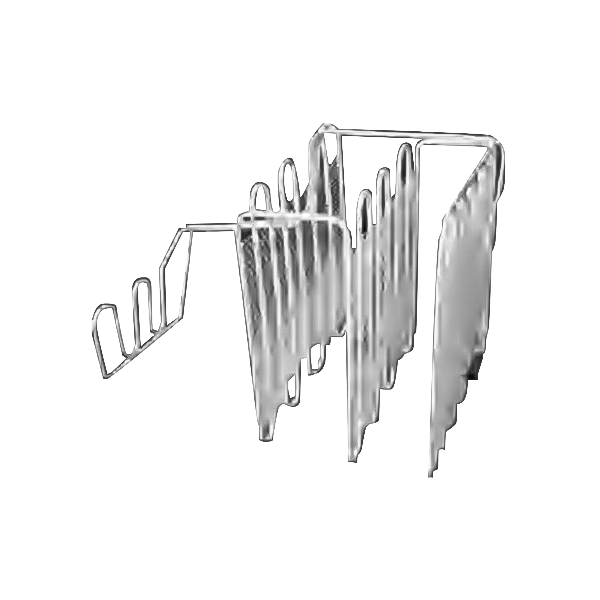
Wire tube evaporators are a core heat exchange component widely used in household refrigerators, freezers, and compact cooling appliances. Their primary function is to absorb heat from the refrigerated space and transfer it to the refrigerant circulating within the system. Unlike more complex evaporator designs, wire tube evaporators rely on a simple yet effective structure that combines metal tubing with welded wire fins. This configuration allows consistent heat absorption while maintaining low manufacturing and operating costs.
Energy efficiency in refrigeration is closely linked to how effectively heat can be removed with minimal power input. Wire tube evaporators contribute to this goal by offering stable thermal performance, low airflow resistance, and compatibility with passive cooling designs. These characteristics make them especially suitable for energy-conscious applications where simplicity and reliability are priorities.
The design of a wire tube evaporator directly affects how much energy a refrigeration system consumes. The spacing of the wire fins, the diameter of the tubing, and the choice of material all determine how efficiently heat is transferred. A well-optimized design allows the refrigerant to evaporate evenly, reducing compressor workload and improving overall system efficiency.
Because wire tube evaporators are often mounted externally or along cabinet walls, they benefit from natural convection. This passive heat exchange reduces reliance on fans, which are common energy consumers in forced-air systems. By minimizing auxiliary components, the system can achieve lower power consumption without sacrificing cooling performance.
Most wire tube evaporators are manufactured using steel or copper tubing combined with steel wire. Copper offers superior thermal conductivity, while steel provides structural durability and cost advantages. Selecting the appropriate material balance ensures efficient heat transfer while keeping production and lifecycle costs under control.
When compared to plate or fin-and-tube evaporators, wire tube evaporators stand out for their simplicity and consistent performance. They may not deliver the highest heat transfer rates per unit area, but they compensate by operating efficiently under low airflow and low maintenance conditions. This makes them particularly effective in applications where steady cooling is more important than rapid temperature pull-down.
Another efficiency advantage lies in reduced frosting issues. The open structure of wire tube evaporators allows frost to form more evenly and melt naturally during off cycles, reducing the need for energy-intensive defrost systems. This characteristic supports long-term energy savings and stable operation.
Energy efficiency is not only about reducing electricity usage but also about minimizing mechanical strain on system components. Wire tube evaporators promote even refrigerant evaporation, which helps maintain stable suction pressures. This stability reduces frequent compressor cycling, one of the main contributors to energy loss and mechanical wear.
Over time, a lower compressor load translates into longer equipment lifespan and more predictable energy consumption. For manufacturers and end users alike, this balance between efficiency and durability is a key reason wire tube evaporators remain widely adopted.
Wire tube evaporators are especially effective in small to medium-capacity refrigeration systems. Domestic refrigerators, chest freezers, beverage coolers, and medical storage units benefit from their low energy demand and quiet operation. In these settings, the evaporator’s ability to function without complex airflow management directly supports energy-saving goals.
They are also well-suited for regions where energy costs are high or power supply stability is a concern. The reduced electrical complexity of systems using wire tube evaporators helps ensure consistent cooling performance even under fluctuating conditions.
The manufacturing process of wire tube evaporators is relatively straightforward, involving tube bending, wire welding, and surface coating. This simplicity results in fewer defects and more consistent quality, which directly affects thermal performance and energy efficiency during operation.
Additionally, simpler manufacturing often leads to lighter components. Reduced system weight can improve overall appliance efficiency, especially during transportation and installation, contributing to a lower environmental footprint across the product lifecycle.
| Evaporator Type | Energy Demand | Maintenance Needs | Typical Applications |
|---|---|---|---|
| Wire Tube Evaporator | Low | Minimal | Domestic, Compact Units |
| Plate Evaporator | Medium | Moderate | Commercial Refrigeration |
| Fin-and-Tube Evaporator | Higher | Higher | Industrial Cooling |
Ongoing advancements in materials, coatings, and refrigerant compatibility continue to enhance the efficiency potential of wire tube evaporators. Improved corrosion-resistant finishes and optimized wire geometries allow for better heat transfer while maintaining long-term performance.
As energy regulations become more stringent, manufacturers are refining wire tube evaporator designs to meet higher efficiency standards without sacrificing affordability. This evolution ensures their continued relevance in modern refrigeration systems focused on sustainability and cost control.
Wire tube evaporators may appear simple, but their contribution to energy efficiency in refrigeration is substantial. Through passive heat transfer, reduced auxiliary power needs, and stable system operation, they help lower overall energy consumption while supporting reliable cooling performance.
For applications where consistency, durability, and energy savings are essential, wire tube evaporators remain a practical and effective solution. Their proven design and ongoing improvements position them as a key component in energy-efficient refrigeration now and in the future.
Your email address will not be published. Required field are marked*

No.380 Kangyang Rd in the north,HuangdaiTown,Xiangcheng District,Suzhou City,215143

0512-65481378

 English
 中文简体
中文简体
