 English
 中文简体
中文简体Industry News
HOME / BLOG / Industry News / Why Are Tube On Plate Condensers Preferred in Industrial Cooling Systems?




Content
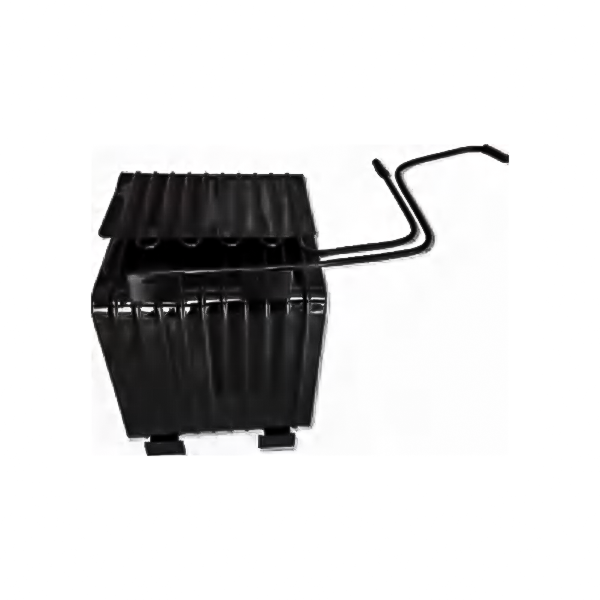
Tube on plate condensers are a critical component in many industrial cooling systems. They consist of tubes mechanically expanded into a plate or sheet metal structure, allowing heat from a vapor or fluid to transfer efficiently to a cooling medium. These condensers are widely used in chemical plants, power stations, HVAC systems, and refrigeration units due to their robust design and high thermal efficiency.
Unlike shell-and-tube or plate heat exchangers, tube on plate condensers offer a balance of easy maintenance, structural strength, and adaptability to high-pressure and high-temperature conditions. Their unique configuration ensures consistent performance even in demanding industrial environments.
The design of tube on plate condensers provides several performance advantages. Tubes are securely fastened into the plate, minimizing leakage risks and allowing for high-pressure operation. Plate thickness and tube material can be customized to suit specific industrial fluids and cooling requirements.
Common materials used include stainless steel, copper, and titanium, chosen based on corrosion resistance, thermal conductivity, and operational pressure. The flexibility in material selection makes these condensers suitable for a wide range of industrial processes.
Tube on plate condensers achieve high thermal efficiency due to increased surface contact between the tube walls and the plate. The arrangement of tubes and the plate’s large surface area promote rapid condensation of vapors and effective heat removal from liquids.
Enhanced heat transfer allows industrial systems to operate at optimal temperatures, improving process efficiency, product quality, and energy consumption. The configuration supports high flow rates, making it ideal for large-scale industrial cooling needs.
The tube layout in these condensers can be tailored for specific cooling requirements. Single-pass or multi-pass designs allow fluid to travel through multiple paths, enhancing heat exchange and improving condensation efficiency. Optimized layouts also reduce pressure drop, minimizing energy required to pump fluids.
One reason tube on plate condensers are preferred in industrial systems is their durability. The mechanical expansion of tubes into plates provides a strong joint that resists vibration, thermal expansion, and corrosion-related stresses.
Maintenance is simplified because individual tubes can be inspected, cleaned, or replaced without dismantling the entire unit. This feature is particularly valuable in chemical and petrochemical industries where fouling and scaling can occur over time.
Selecting corrosion-resistant materials such as stainless steel or titanium ensures long-term reliability. These materials withstand acidic, alkaline, and saline environments, reducing the need for frequent replacements. Additionally, smooth tube surfaces minimize fouling, maintaining consistent thermal performance.
Tube on plate condensers are versatile, supporting applications ranging from high-pressure steam condensation in power plants to cooling of refrigerants in HVAC systems. They can handle single-phase and two-phase fluids and are compatible with diverse process chemicals.
Industries such as food processing, pharmaceuticals, and petrochemicals benefit from their adaptability. Custom designs can incorporate multiple inlet and outlet connections, allowing integration with existing piping networks and reducing retrofit costs.
| Feature | Tube On Plate Condenser | Shell & Tube Condenser | Plate Heat Exchanger |
| Durability | High | Moderate | Moderate |
| Maintenance Ease | High | Moderate | Low |
| Pressure & Temperature Capability | High | High | Moderate |
| Flexibility in Fluids | High | Moderate | Low |
Tube on plate condensers often achieve superior heat transfer efficiency, reducing energy consumption in cooling systems. By maximizing condensation rates and minimizing pressure drop, less energy is required for pumps, fans, or compressors to move fluids.
Industrial facilities benefit from reduced operating costs and improved sustainability metrics when using these condensers. Optimizing tube diameters, plate thickness, and fluid flow paths can further enhance energy efficiency.
The modular design of tube on plate condensers allows easy integration into existing cooling loops. Customizable connections, orientations, and mounting options enable compatibility with a variety of plant layouts.
This flexibility reduces installation time and costs compared to more rigid condenser types, making tube on plate condensers attractive for retrofits and upgrades in established industrial systems.
Tube on plate condensers are preferred in industrial cooling systems because they combine durability, high thermal efficiency, ease of maintenance, and design flexibility. Their ability to handle diverse fluids under varying pressures and temperatures makes them ideal for demanding industrial applications.
With advantages in energy efficiency, operational reliability, and long-term maintenance cost reduction, these condensers represent a practical and effective solution for modern industrial cooling needs. As industries seek more sustainable and efficient operations, tube on plate condensers continue to be a top choice for engineers and facility managers.
Your email address will not be published. Required field are marked*

No.380 Kangyang Rd in the north,HuangdaiTown,Xiangcheng District,Suzhou City,215143

0512-65481378


