



A built-in condenser is a heat rejection component integrated directly into a refrigeration or cooling system's housing rather than mounted as a separate external unit. If you are selecting refrigeration equipment — commercial refrigerators, display cases, wine coolers, laboratory freezers, or water chillers — a built-in condenser eliminates the need for external condensing unit installation, reduces overall footprint, and simplifies service, while the trade-off is greater sensitivity to ambient temperature and the need for adequate ventilation clearance around the unit.
This guide explains how built-in condensers work, where they outperform remote condensing unit designs, what specifications determine real-world performance, and what installation conditions determine whether a built-in configuration is appropriate for your application.
Content
In any vapor-compression refrigeration cycle, the condenser is responsible for rejecting heat from the refrigerant to the surrounding environment. The refrigerant enters the condenser as a hot, high-pressure vapor after being compressed, then gives up its heat and exits as a high-pressure liquid, ready to expand and absorb heat again at the evaporator.
In a built-in (also called self-contained or integral) configuration, the condenser coil, condenser fan, compressor, and expansion device are all housed within the same cabinet as the cooling compartment. The system draws ambient air across the condenser coil using an internal fan, exhausts the heated air, and does this continuously during operation.
The key thermal relationship: condenser efficiency drops as the difference between the refrigerant condensing temperature and the ambient air temperature narrows. This is why ambient temperature is the most critical installation variable for any built-in condenser system — the condenser must always be rejecting heat to air that is cooler than the refrigerant condensing temperature, typically 30–50°C above the ambient for the system to function within design parameters.
Most built-in condensers in commercial and consumer equipment are air-cooled — a fan draws room air over a finned coil to carry away heat. Some laboratory and industrial units use water-cooled built-in condensers, where process water or chilled water passes through a coil or shell-and-tube heat exchanger integrated into the unit. Water-cooled built-in condensers are independent of ambient temperature and can operate in hot environments where air-cooled designs would be stressed, but they require a continuous water supply and drain connection, adding installation complexity.
The alternative to a built-in condenser is a remote condensing unit — a separate compressor and condenser assembly mounted on a rooftop, in a mechanical room, or outside the building, connected to the evaporator inside by refrigerant lines. Both configurations complete the same thermodynamic cycle, but the practical implications for installation, maintenance, and performance differ significantly.
| Factor | Built-in Condenser | Remote Condensing Unit |
|---|---|---|
| Installation complexity | Low — plug in and ventilate | High — refrigerant line sets, outdoor unit mounting |
| Installation cost | Lower | Higher (line set labor, penetrations) |
| Heat rejection in space | Yes — adds heat load to the room | No — heat rejected outside or to remote location |
| Ambient temperature sensitivity | High — performance degrades in hot rooms | Low — condenser is in controlled or outdoor space |
| Noise in occupied space | Higher — compressor and fan are present | Lower — compressor noise is remote |
| Maintenance access | Single location — all components accessible at unit | Two locations — indoor evaporator + outdoor condenser |
| Scalability | Limited — each unit is self-contained | High — multiple cases can share one remote unit |
| Refrigerant leak risk in space | Contained — small charge, single location | Higher — line sets throughout building |
Built-in condensers are the practical choice for standalone units, smaller installations, and locations where refrigerant line installation is impractical or cost-prohibitive. Remote condensing units are preferred for large multi-case supermarket or cold storage installations where centralizing heat rejection and sharing compressor capacity across many cases improves overall efficiency.
Built-in condensers appear across a wide range of equipment types. The application context determines which specific condenser design and performance specifications are critical.
Reach-in refrigerators, undercounter refrigerators, bottle coolers, and upright display cases in restaurants, convenience stores, and small retail food operations almost universally use built-in condensers. A standard commercial reach-in with a built-in condenser contains the complete refrigeration system in the cabinet and requires only an electrical connection and adequate clearance for airflow — typically 3–6 inches at the rear and sides and unrestricted top exhaust for front-breathing units.
Top-mount vs. bottom-mount condenser placement in commercial refrigeration cases significantly affects performance and maintenance access. Top-mount units exhaust heat upward and away from the cooling compartment; bottom-mount units are more accessible for coil cleaning but are susceptible to grease and dust accumulation on the condenser fins from floor-level airflow in kitchen environments.
Ultra-low temperature (ULT) freezers, cryogenic storage units, laboratory refrigerators, and incubated coolers use built-in condensers because laboratory environments demand self-contained, validated equipment that does not rely on external infrastructure for refrigeration function. A ULT freezer operating at −80°C uses a cascade refrigeration circuit with two built-in condensers in series — the first stage condenser is air-cooled against room air, and the second stage condenser rejects heat into the first-stage refrigerant circuit.
ULT freezers are among the most energy-intensive laboratory equipment, typically consuming 16–22 kWh per day — all of which is ultimately rejected as heat through the built-in condenser into the room. In a laboratory with multiple ULT freezers, this cumulative heat load requires dedicated HVAC capacity, underlining why ambient temperature management is inseparable from built-in condenser performance.
Compact process chillers used for laser cooling, CNC machine spindle cooling, injection molding temperature control, and chemical reactor cooling frequently use built-in air-cooled condensers in capacities from 1 kW to 20 kW. These units are self-contained on a wheeled frame or skid, requiring only electrical and process water connections.
For indoor installation of process chillers with built-in air-cooled condensers, the heat rejection load is critical to room HVAC design. A 10 kW chiller with a COP of 3 rejects approximately 13.3 kW of heat into the space — equivalent to running four electric space heaters simultaneously. In industrial facilities with high ambient temperatures in summer, this heat addition can push room temperature above the condenser's rated ambient maximum, reducing chiller capacity and potentially triggering high-pressure safety shutdowns.
Consumer and semi-commercial wine coolers, beverage centers, and residential refrigerators all use built-in condensers. Modern residential refrigerators use a condenser coil bonded to the rear panel or wrapped around the refrigerator liner — a configuration called a "no-clean condenser" or "static condenser" because it relies on natural convection and radiates heat through the cabinet walls rather than using a fan and separate coil. This eliminates fan noise and maintenance but is less efficient than forced-air condenser designs used in commercial equipment.
Pharmacy refrigerators, vaccine storage units, blood bank refrigerators, and medical-grade freezers require built-in condensers to maintain tight temperature stability validated under international standards (WHO PQS, EN 1422, USP 1079). Self-contained refrigeration is mandatory for portable and backup units that must operate independently of facility infrastructure during power failures when connected to emergency circuits.
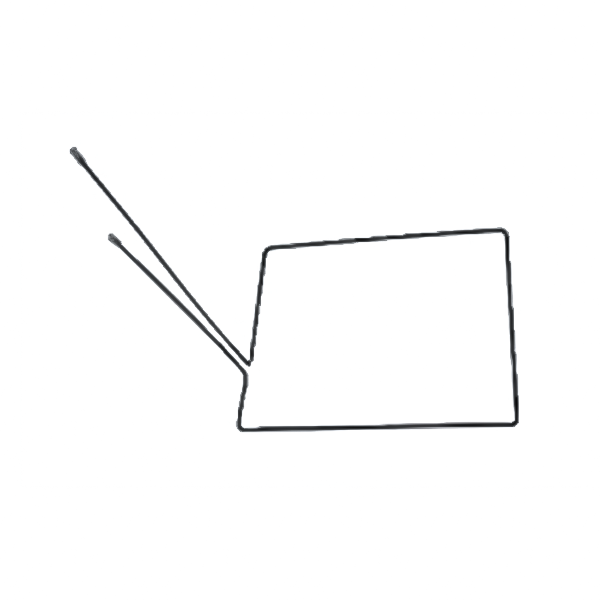
When evaluating equipment with built-in condensers, several specifications directly determine real-world operating performance. These are the numbers to examine before purchasing.
Every built-in condenser system is rated for a specific ambient temperature range within which it will maintain its specified cooling capacity. Common commercial ranges are:
Installing a unit in an ambient temperature consistently above its rated maximum is the single most common cause of premature compressor failure in self-contained refrigeration equipment. Operating at 38°C in a unit rated to 32°C maximum increases condensing pressure, raises compressor discharge temperature, and forces the compressor to work outside its design envelope — reducing compressor life from an expected 10–15 years to potentially 3–5 years.
Larger condenser coil face area and higher fin count increase heat transfer surface, allowing more efficient rejection of refrigerant heat at lower temperature differentials. Commercial-grade built-in condensers use copper tubes with aluminum fins at 8–14 fins per inch (FPI) for most applications. Higher FPI increases heat transfer efficiency but also increases the rate of dust and debris accumulation in the fin channels, requiring more frequent cleaning.
The condenser fan must move sufficient air volume across the condenser coil to carry away the heat load. Airflow rate is typically expressed in CFM (cubic feet per minute) or m³/h. For a commercial reach-in refrigerator, condenser fan airflow rates of 150–400 CFM are typical. Inadequate airflow — from a failed fan motor, obstructed intake, or fan blade fouling — produces the same performance degradation as elevated ambient temperature: rising condensing pressure, reduced capacity, and increased compressor load.
Condensing temperature — the temperature at which the refrigerant changes phase from vapor to liquid in the condenser — should be 15–20°C above the ambient air temperature for a well-performing air-cooled built-in condenser under design conditions. Higher differentials indicate reduced efficiency; lower differentials indicate the condenser is oversized or the ambient is very cool.
Subcooling — the additional cooling of the liquid refrigerant below its condensing temperature before it leaves the condenser — improves system efficiency by ensuring the refrigerant arrives at the expansion device as fully liquid, preventing flash gas losses. 5–10°C of subcooling is typical for a properly operating built-in air-cooled condenser; insufficient subcooling produces flash gas in the liquid line that reduces refrigerant mass flow and system capacity.
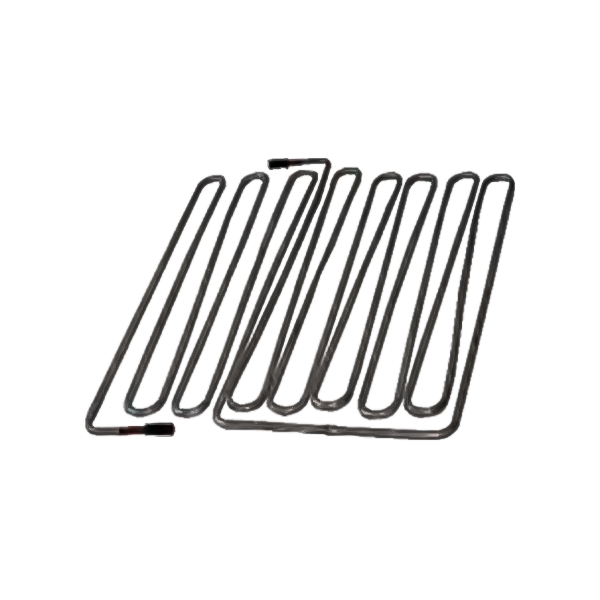
Adequate ventilation is the most consistently overlooked installation requirement for built-in condenser equipment. Restricted airflow forces the condenser to work harder, raises operating pressures, increases energy consumption, and shortens compressor life — all without triggering any obvious immediate failure that would alert the user to the problem.
Ventilation requirements vary by unit design and manufacturer specifications, but the following represent typical commercial requirements:
| Unit Type | Air Intake Location | Exhaust Location | Minimum Clearance |
|---|---|---|---|
| Commercial reach-in (top mount) | Front bottom grille | Top rear | 6" top, 3" sides, ceiling clearance |
| Commercial reach-in (bottom mount) | Front bottom grille | Front bottom grille | 3" front, unrestricted front lower |
| Undercounter refrigerator | Front grille or rear panel | Front grille or top rear | 1–2" sides, 2–3" rear if rear exhaust |
| Process chiller (air-cooled) | Front or sides | Top | 12–24" top, 12" sides, 18" front |
| Laboratory ULT freezer | Front lower or rear | Rear upper or top | 4–6" sides, 6–8" rear, no top obstruction |
A particularly important installation scenario is the recirculation problem: when a built-in condenser exhausts heated air that is then drawn back into its own intake because of insufficient clearance or an enclosed space. This progressively raises the effective ambient temperature around the condenser, degrading performance in a feedback loop. In any enclosed space — an under-counter cavity, a closet installation, or a tight equipment room — ensure that hot exhaust air has a clear path to room air that is not also the intake path.
Built-in air-cooled condensers are the most maintenance-neglected component in commercial refrigeration. Unlike a refrigerant leak or a failed fan motor that produces an obvious symptom, a partially fouled condenser coil degrades performance gradually and silently — raising energy consumption, reducing cooling capacity, and shortening compressor life over months or years before any visible problem appears.
Research from the Electric Power Research Institute (EPRI) found that a condenser coil with moderate dust fouling — reducing airflow by 30% — increases compressor energy consumption by 10–15% and reduces system capacity by 8–12%. In a commercial refrigerator running 24 hours per day, that energy penalty compounds significantly over the unit's service life.
Never use high-pressure water jets on air-cooled condenser coils — the fin pack can be bent, reducing airflow and requiring professional fin-combing to restore. Low-pressure rinse from a garden hose spray nozzle or a dedicated coil cleaning kit is appropriate for condensers accessible to water rinsing.
Built-in condenser faults produce recognizable symptom patterns. Knowing which measurements to take and what they indicate allows faster diagnosis without extensive refrigeration diagnostics equipment.
The refrigerant used in a built-in condenser system affects its operating pressures, efficiency, environmental impact, and regulatory compliance. Several refrigerant transitions are underway in commercial and laboratory refrigeration equipment that affect equipment selection and long-term serviceability.
| Refrigerant | GWP | Typical Application | Regulatory Status |
|---|---|---|---|
| R-134a | 1,430 | Commercial refrigerators, lab equipment, chillers | Being phased down (EU F-Gas, EPA SNAP) |
| R-404A | 3,922 | Commercial freezers, low-temperature cases | Phased out in new equipment (EU, UK) |
| R-290 (Propane) | 3 | Commercial plug-in refrigerators, small display cases | Preferred low-GWP option; flammable (A3 class) |
| R-513A / R-450A | 630 / 601 | R-134a replacement in lab and commercial equipment | Non-flammable lower-GWP transition option |
| R-744 (CO₂) | 1 | Supermarket systems, vending, ULT freezers | Growing adoption; high operating pressures |
R-290 (propane) is increasingly the refrigerant of choice for small commercial built-in condenser units — supermarkets and convenience stores are transitioning display cases rapidly. Charge sizes are limited to 150g (and up to 500g under revised IEC 60335-2-89 in some markets) to manage flammability risk, which constrains R-290's use to smaller equipment capacities. For larger built-in condenser equipment or units in environments where flammable refrigerants are prohibited, R-513A and R-450A are the practical low-GWP alternatives to R-134a without flammability concerns.
Before specifying or purchasing equipment with a built-in condenser, work through these questions to confirm the configuration is appropriate and the installation conditions are compatible:
Built-in condensers reward thorough upfront specification and consistent maintenance — the equipment itself is reliable when operated within its design conditions, but it amplifies the consequences of installation mistakes and neglected servicing more than any other refrigeration configuration. Getting the ambient temperature, clearances, and maintenance schedule right from day one produces equipment that regularly achieves its rated service life of 10–15 years or more.
Your email address will not be published. Required field are marked*

No.380 Kangyang Rd in the north,HuangdaiTown,Xiangcheng District,Suzhou City,215143

0512-65481378

 English
 中文简体
中文简体
