



Content
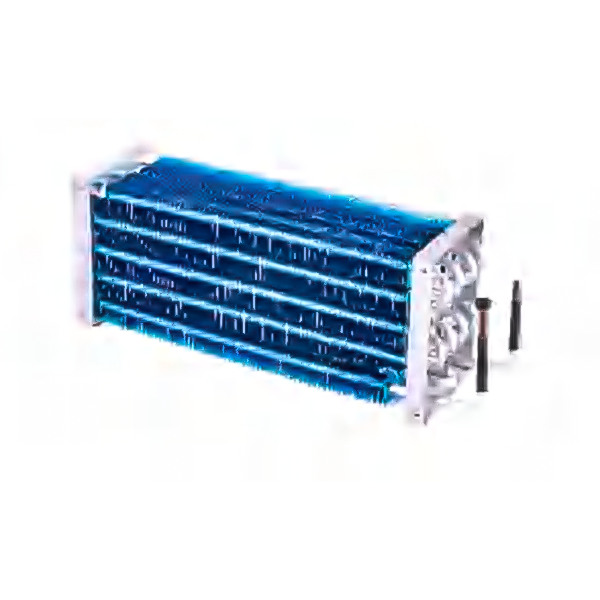
Aluminum tube fin evaporators deliver superior thermal conductivity with weight reductions of up to 40% compared to copper-based alternatives, making them the preferred choice for modern HVAC systems, refrigeration units, and automotive air conditioning applications. These heat exchangers utilize extruded aluminum tubes bonded with aluminum fins to maximize surface area contact while minimizing material costs and corrosion risks.
The fundamental principle behind aluminum tube fin evaporators lies in their ability to efficiently absorb heat from surrounding air or fluids. When refrigerant flows through the aluminum tubes, it undergoes a phase change from liquid to gas, absorbing substantial amounts of thermal energy. The attached fins dramatically increase the effective heat transfer surface area—often by a factor of 8 to 12 times compared to bare tubes alone.
Industry testing demonstrates that properly designed aluminum tube fin evaporators achieve heat transfer coefficients ranging from 30 to 50 W/m²·K under typical operating conditions. This performance level rivals traditional copper-aluminum combinations while offering significant advantages in manufacturability, recyclability, and resistance to formicary corrosion—a common failure mode in coastal or industrial environments.
The construction of aluminum tube fin evaporators involves precise engineering at multiple stages. Manufacturers begin with high-purity aluminum alloys, typically AA3003 or AA1100 series, selected for their excellent thermal conductivity (approximately 200-220 W/m·K) and formability characteristics.
Modern production employs two primary tube manufacturing methods:
The bond between tubes and fins critically determines overall thermal performance. Three dominant attachment technologies exist:
| Parameter | Typical Range | Impact on Performance |
|---|---|---|
| Fin spacing | 1.5 - 3.0 mm | Closer spacing increases surface area but raises air-side pressure drop |
| Fin thickness | 0.10 - 0.15 mm | Thinner fins reduce weight and material cost but may compromise structural rigidity |
| Tube wall thickness | 0.30 - 0.50 mm | Affects burst pressure rating and thermal resistance; thinner walls improve heat transfer |
| Fins per inch (FPI) | 10 - 20 FPI | Higher FPI values boost capacity but require more fan power to overcome airflow resistance |
Maximizing the efficiency of aluminum tube fin evaporators requires balancing multiple competing factors. Air velocity, refrigerant distribution, and surface treatments all play critical roles in determining real-world performance.
Optimal face velocity across the evaporator coil typically ranges from 2.0 to 3.5 m/s. Below this range, boundary layer effects reduce heat transfer coefficients; above it, excessive pressure drops force fans to consume disproportionate electrical power. Computational fluid dynamics (CFD) modeling reveals that installing flow straighteners or louvers upstream can improve air distribution uniformity by 15-25%, directly translating to capacity gains.
Proper refrigerant circuiting ensures even distribution across all tube circuits. Uneven feeding causes some circuits to operate in superheated vapor mode while others remain flooded with liquid, reducing overall effectiveness by up to 30%. Modern designs employ:
Advanced surface treatments significantly boost heat transfer without increasing frontal area. Hydrophilic coatings reduce water film resistance during dehumidification cycles, improving latent heat removal by 8-12%. Micro-channel textures etched into tube interiors create turbulence that enhances nucleate boiling, raising internal heat transfer coefficients by factors of 2-3 times compared to smooth surfaces.
Different industries impose unique requirements on aluminum tube fin evaporator designs. Understanding these variations helps engineers select appropriate configurations for specific use cases.
Split-system air conditioners and heat pumps represent the largest market segment. These applications prioritize quiet operation, compact footprint, and compatibility with R-410A or emerging low-GWP refrigerants like R-32 and R-454B. Typical capacities range from 9,000 to 60,000 BTU/h (2.6-17.6 kW), with evaporator face areas between 0.3 and 1.5 square meters. Multi-zone systems increasingly utilize variable-speed compressors paired with modulating expansion valves, requiring evaporators capable of stable operation across wide capacity ranges.
Vehicle cabin cooling demands extreme compactness and vibration resistance. Aluminum tube fin evaporators in cars typically measure less than 300mm × 250mm × 50mm while handling heat loads exceeding 5 kW under peak solar conditions. The shift toward electric vehicles introduces new challenges: reduced waste heat availability means evaporators must operate efficiently at lower compressor speeds, and integration with battery thermal management systems creates opportunities for shared coolant loops.
Walk-in coolers, freezer warehouses, and process cooling applications require evaporators built for continuous duty cycles and harsh environments. These units often feature heavier-gauge aluminum (0.5-0.8mm tube walls), protective epoxy coatings against ammonia or CO₂ exposure, and defrost mechanisms such as hot gas bypass or electric heaters. Operating temperatures may plunge to -40°C, demanding careful attention to material brittleness and lubricant return characteristics.
| Application Sector | Typical Capacity Range | Operating Temperature | Key Design Priority |
|---|---|---|---|
| Residential HVAC | 2.6 - 17.6 kW | 5 - 15°C evaporating | Noise reduction, compact size |
| Automotive AC | 3 - 8 kW | 0 - 10°C evaporating | Vibration resistance, minimal volume |
| Cold Storage | 10 - 100+ kW | -40 to -10°C evaporating | Durability, defrost efficiency |
| Process Cooling | 50 - 500+ kW | Custom based on process | Corrosion resistance, maintainability |
While aluminum tube fin evaporators offer excellent durability, proper maintenance extends service life and preserves efficiency. Field data indicates that neglected coils lose 15-25% of rated capacity within three years due to fouling and corrosion.
Regular cleaning prevents particulate accumulation that insulates fins and restricts airflow. Recommended practices include:
Aluminum naturally forms a protective oxide layer, but certain environments accelerate degradation. Formicary corrosion—microscopic tunnels caused by organic acids from cleaning agents, adhesives, or building materials—represents the primary threat. Prevention strategies include:
Refrigerant leaks compromise system performance and environmental compliance. Electronic leak detectors calibrated for specific refrigerants identify leaks as small as 0.5 ounces per year. For minor leaks in accessible locations, aluminum-specific epoxy sealants provide temporary repairs, though tube replacement remains the definitive solution. Pressure testing with dry nitrogen at 1.5 times operating pressure verifies integrity after any repair work.
The aluminum tube fin evaporator industry continues evolving in response to regulatory pressures, sustainability goals, and emerging technologies. Several developments warrant attention from specifiers and engineers.
Micro-channel technology adoption is accelerating, particularly in commercial refrigeration. These designs replace round tubes with flat multi-port extrusions featuring channel heights below 1mm. Benefits include 20-30% refrigerant charge reduction, improved heat transfer uniformity, and enhanced resistance to vibration-induced fatigue. Challenges remain in managing oil return and addressing susceptibility to blockages from debris.
Additive manufacturing enables previously impossible geometries. 3D-printed aluminum evaporators incorporate lattice structures and graded porosity that optimize heat transfer while minimizing pressure drop. Early prototypes demonstrate 40% weight savings compared to conventional designs, though production costs currently limit applications to aerospace and high-value industrial systems.
Smart monitoring integration transforms maintenance from reactive to predictive. Embedded sensors track surface temperatures, pressure differentials, and vibration signatures in real-time. Machine learning algorithms analyze this data to predict fouling rates, detect early-stage corrosion, and optimize defrost cycles. Field trials report 15-20% energy savings from adaptive control strategies enabled by these intelligent evaporators.
Regulatory drivers push manufacturers toward ultra-low global warming potential (GWP) refrigerants. A2L mildly flammable refrigerants like R-32 and R-454B require modified safety protocols but enable higher efficiencies. Aluminum's non-sparking characteristics make it inherently safer than copper when handling flammable refrigerants, potentially accelerating market transition.
Circular economy principles influence material selection and end-of-life planning. Aluminum's infinite recyclability—with recycling requiring only 5% of the energy needed for primary production—positions aluminum tube fin evaporators favorably compared to mixed-material alternatives. Design-for-disassembly features, such as snap-fit fin packs and modular tube bundles, facilitate component recovery and refurbishment.
Your email address will not be published. Required field are marked*

No.380 Kangyang Rd in the north,HuangdaiTown,Xiangcheng District,Suzhou City,215143

0512-65481378

 English
 中文简体
中文简体
