



Content
Tube on plate condensers represent a highly efficient solution for heat rejection in refrigeration and air conditioning systems, particularly in domestic and light commercial applications. By bonding copper or aluminum tubing directly onto stamped metal plates, this design maximizes the surface area available for heat dissipation while maintaining a compact footprint. The primary benefit is the enhanced thermal contact achieved through mechanical or adhesive bonding, which reduces thermal resistance and improves overall system COP (Coefficient of Performance) by up to 15% compared to traditional wire-on-tube designs.
These condensers are favored for their durability and aesthetic appeal, as the flat plate surface protects the tubing from physical damage and allows for easy cleaning. In environments where space is constrained, such as under-counter refrigerators or integrated kitchen appliances, the slim profile of tube on plate condensers offers a distinct advantage without compromising cooling capacity. Their construction also minimizes refrigerant charge requirements, aligning with modern environmental regulations aimed at reducing global warming potential (GWP).
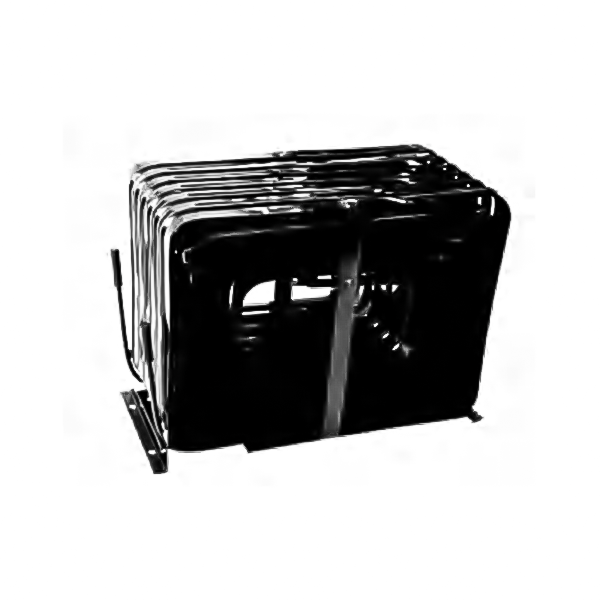
The efficiency of a tube on plate condenser relies on the effective transfer of heat from the hot refrigerant gas inside the tubes to the ambient air via the metal plate. Several key factors influence this process:
| Parameter | Impact on Efficiency | Optimization Strategy |
|---|---|---|
| Bonding Quality | Poor contact increases thermal resistance | Use epoxy adhesives or roll-bonding techniques |
| Plate Material | Thermal conductivity dictates heat spread | Aluminum for cost/weight; Copper for max performance |
| Airflow Velocity | Higher velocity improves convection | Ensure adequate clearance and fan sizing |
| Surface Finish | Emissivity affects radiative heat loss | Black coating enhances radiation by 20–30% |
Applying a high-emissivity black coating to the plate surface significantly boosts performance by enhancing radiative heat transfer, which can account for up to 30% of total heat rejection in static air conditions. This is particularly beneficial in natural convection applications where airflow is limited. Additionally, protective coatings prevent corrosion, extending the lifespan of the condenser in humid or coastal environments.
The production of tube on plate condensers involves precise engineering to ensure consistent quality and performance. The choice of materials and bonding methods directly impacts cost, weight, and durability.
Manufacturers must also consider the burst pressure rating of the tubing, typically designed to withstand pressures exceeding 30 bar to accommodate high-pressure refrigerants like R410A or R454B. Rigorous leak testing using helium mass spectrometry ensures integrity before assembly.
Proper installation and regular maintenance are critical to sustaining the efficiency of tube on plate condensers. Incorrect positioning or neglect can lead to reduced cooling capacity and increased energy consumption.
If the condenser feels unusually hot to the touch but the system is not cooling effectively, it may indicate restricted airflow or non-condensable gases in the system. Conversely, if parts of the condenser remain cold while others are hot, it could signal a refrigerant blockage or uneven distribution. Regular monitoring of suction and discharge pressures helps diagnose these issues before they escalate into costly repairs.
Your email address will not be published. Required field are marked*

No.380 Kangyang Rd in the north,HuangdaiTown,Xiangcheng District,Suzhou City,215143

0512-65481378

 English
 中文简体
中文简体
