



Wire tube evaporators are a cost-effective and reliable heat exchange solution widely used in domestic refrigeration and light commercial cooling systems. Their simple structure, stable cooling performance, and low manufacturing cost make them especially suitable for refrigerators, freezers, and beverage coolers where steady heat absorption is required.
By combining steel tubing with welded wire loops, wire tube evaporators maximize heat transfer area while maintaining mechanical strength. This article explains how they work, where they perform best, and what practical factors influence their efficiency and service life.
Content
A wire tube evaporator consists of a continuous steel tube bent into a serpentine shape, with steel wires welded perpendicularly along the tube length. These wires act as extended heat transfer surfaces, increasing the effective contact area with surrounding air.
The tube typically carries refrigerants such as R600a or R134a, while the wire diameter usually ranges from 1.2 mm to 1.6 mm. This configuration allows efficient heat absorption without the complexity of finned aluminum structures.
Most wire tube evaporators use low-carbon steel tubing with an anti-corrosion coating, such as epoxy or PE powder coating. This treatment extends service life and prevents rust in humid operating environments.
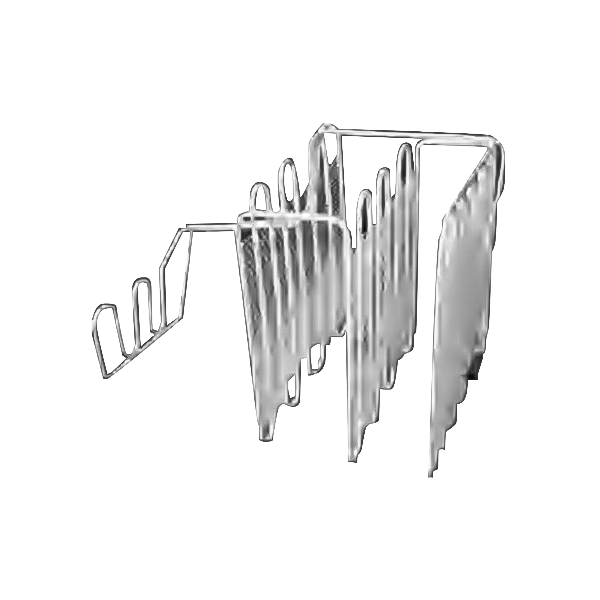
Wire tube evaporators rely on natural convection for heat transfer. As warm air contacts the cold tube and wires, heat is absorbed by the refrigerant flowing inside, lowering the internal cabinet temperature.
In a standard household refrigerator, a wire tube evaporator can achieve a heat transfer capacity of approximately 80–120 W, depending on tube length, wire density, and refrigerant flow rate.
Wire tube evaporators are commonly mounted on the rear wall or wrapped around the inner liner of refrigerators and freezers. This placement allows efficient heat absorption while keeping the evaporator protected from mechanical damage.
They are widely used in:
Compared with finned aluminum evaporators, wire tube evaporators offer simpler construction and lower production cost, though with slightly lower peak heat transfer efficiency.
| Type | Cost | Heat Transfer | Maintenance |
|---|---|---|---|
| Wire Tube | Low | Medium | Low |
| Finned Aluminum | Higher | High | Medium |
Wire tube evaporators perform efficiently in systems designed for natural convection. When paired with high-efficiency compressors, they contribute to overall energy consumption reductions of 5–10% compared to poorly matched evaporator designs.
Their compatibility with hydrocarbon refrigerants makes them suitable for energy-efficient and environmentally friendly refrigeration systems.
With proper coating and operating conditions, wire tube evaporators can achieve a service life exceeding 10–15 years. Their simple welded structure reduces the risk of refrigerant leakage.
Factors affecting longevity include coating quality, operating humidity, and mechanical vibration during compressor cycles.
Maintenance requirements for wire tube evaporators are minimal. Periodic dust removal from exposed surfaces helps maintain consistent heat exchange efficiency.
Because there are no thin fins to deform, cleaning is less likely to cause physical damage compared to finned evaporator designs.
Wire tube evaporators continue to be widely adopted due to their balance of cost, durability, and dependable cooling performance. They are especially suitable for mass-produced refrigeration appliances where long-term reliability is critical.
For manufacturers and system designers seeking a proven, low-maintenance evaporator solution, wire tube evaporators remain a practical and efficient choice.
Your email address will not be published. Required field are marked*

No.380 Kangyang Rd in the north,HuangdaiTown,Xiangcheng District,Suzhou City,215143

0512-65481378

 English
 中文简体
中文简体
