



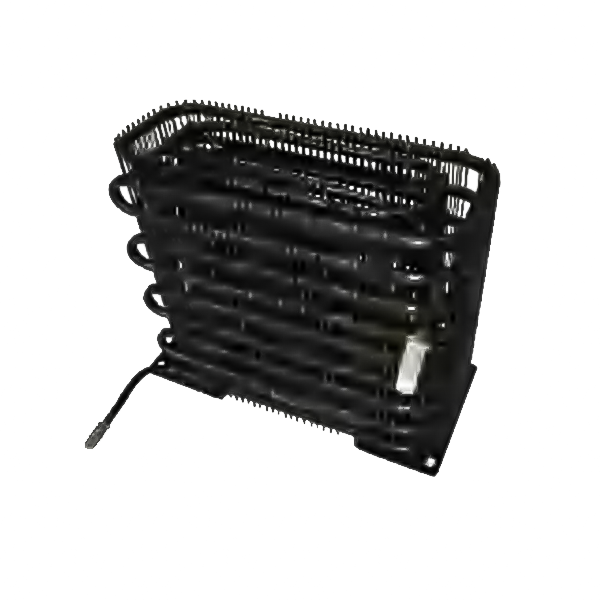
Multilayer wire on tube condensers represent a specialized evolution in heat exchange technology, designed to maximize thermal efficiency within compact spatial constraints. By wrapping multiple layers of wire around primary tubing, these units significantly increase the surface area available for heat dissipation without expanding the overall footprint. This design is particularly effective in applications where space is limited but high cooling capacity is required, such as in automotive air conditioning systems, compact refrigeration units, and industrial process cooling. The core advantage lies in the turbulent airflow generated by the wire matrix, which disrupts the boundary layer of air surrounding the tubes, thereby enhancing the heat transfer coefficient.
For engineers and HVAC specialists, understanding the mechanics of multilayer wire on tube condensers is essential for optimizing system performance. Unlike traditional fin-and-tube designs, which rely on flat or louvered fins, the wire-on-tube configuration offers superior durability and resistance to fouling. The open structure allows debris to pass through more easily, reducing maintenance frequency. Furthermore, the modular nature of the wire winding allows for precise customization of heat transfer rates, making it a versatile solution for diverse thermal management challenges.
Content
The fundamental construction of a multilayer wire on tube condenser involves a series of parallel tubes, typically made of copper or aluminum, with wires wound spirally around them. In multilayer configurations, these wires are stacked or woven in multiple tiers, creating a dense mesh that acts as both a structural support and an extended heat transfer surface.
The primary mechanism behind the enhanced efficiency of this design is the disruption of the laminar boundary layer. As air flows over the cylindrical tubes, a stagnant layer of air forms, acting as an insulator. The protruding wires create turbulence, breaking up this layer and forcing fresh, cooler air into contact with the tube surface. This effect can improve the convective heat transfer coefficient by up to 20-30% compared to smooth tubes, depending on the wire pitch and diameter.
Copper is the preferred material for the tubes due to its exceptional thermal conductivity (~400 W/m·K), while the wires are often made of steel or copper, depending on cost and corrosion resistance requirements. Aluminum variants are also common in automotive applications due to their lightweight nature. The bond between the wire and the tube is critical; typically, they are brazed or welded to ensure minimal thermal contact resistance. Poor bonding can negate the benefits of the increased surface area, leading to hotspots and reduced efficiency.
When compared to conventional fin-and-tube condensers, multilayer wire on tube designs offer distinct operational benefits, particularly in harsh or constrained environments.
| Feature | Wire on Tube | Fin-and-Tube |
|---|---|---|
| Airflow Resistance | Low (Open Structure) | High (Dense Fins) |
| Fouling Resistance | High (Self-Cleaning) | Low (Clogs Easily) |
| Structural Durability | High (Robust Wires) | Medium (Fins Bend Easily) |
| Manufacturing Cost | Moderate to High | Low (Mass Produced) |
The open structure of wire on tube condensers results in lower airside pressure drop, allowing fans to move air more efficiently. This reduces the energy consumption of the fan motor, contributing to overall system efficiency. Additionally, the robust nature of the wires makes the unit less susceptible to damage during cleaning or from external impacts, a common issue with delicate aluminum fins.
The unique properties of multilayer wire on tube condensers make them suitable for specific industries where reliability and compactness are paramount.
In vehicles, space under the hood is at a premium. Wire on tube condensers offer a high heat rejection rate in a slim profile, fitting easily into tight radiator supports. Their resistance to vibration and road debris also makes them ideal for the harsh automotive environment. Many modern electric vehicles (EVs) utilize these condensers for battery thermal management systems, where precise temperature control is critical for battery longevity.
Industrial settings often involve dusty or oily environments that can quickly clog traditional fins. The self-cleaning nature of wire on tube designs allows them to maintain performance longer between maintenance cycles. They are commonly used in cold storage facilities, food processing plants, and chemical processing units where consistent cooling is essential for product quality and safety.
While multilayer wire on tube condensers are durable, proper maintenance is still required to ensure optimal performance. The complex geometry of the wire layers can trap debris if not monitored, although less frequently than fins.
By adhering to these maintenance practices, operators can maximize the lifespan and efficiency of multilayer wire on tube condensers, ensuring reliable thermal management for their systems.
Your email address will not be published. Required field are marked*

No.380 Kangyang Rd in the north,HuangdaiTown,Xiangcheng District,Suzhou City,215143

0512-65481378

 English
 中文简体
中文简体
