 English
 中文简体
Industry News
HOME / BLOG / Industry News / condenser meaning: Applications, Selection Criteria, and Practical Guidance




A condenser is not one universal object. In a refrigerator, it may be the black wire-and-tube panel on the back. In an air-conditioning glossary, it may be the outdoor unit. In an older electrical catalog, the same word may refer to a capacitor. The useful starting point for appliance work is the refrigeration meaning: a condenser is a heat exchanger that removes heat from refrigerant vapor so the refrigerant changes into liquid at high pressure.
That definition matters because it separates a condenser from a simple radiator or a cooling coil. The condenser does not create cold. It rejects heat. When a specification, drawing, or purchase order says “condenser,” confirm which meaning is intended before quoting, testing, or replacing the part.
Content
In a refrigeration circuit, the condenser sits between the compressor and the expansion device. The compressor raises the refrigerant pressure and temperature. The condenser then gives up heat to the surrounding air or water. As the refrigerant loses heat, it reaches its saturation temperature and condenses from vapor into liquid. The liquid is then subcooled slightly before it passes through the expansion device.
The word “condense” describes a phase change, not just a temperature drop. A gas can become cooler without becoming liquid if its pressure is too low or if it has not reached the right condition. In a working refrigeration system, the condenser is designed to remove enough heat at the expected pressure and ambient temperature to produce liquid refrigerant reliably.
This is why condenser performance is tied to system capacity. If the condenser cannot reject heat efficiently, discharge pressure rises, the compressor works harder, and cooling capacity can fall. A condenser that is too small, dirty, blocked, or poorly ventilated can create the same symptoms as a refrigerant charge problem.
Search results for condenser meaning often mix several technical uses. The table below separates the most common ones so that a refrigeration discussion does not drift into electronics or laboratory glassware.
| Context | What “condenser” usually means | Typical example |
|---|---|---|
| Household refrigeration | A heat exchanger that rejects heat from high-pressure refrigerant vapor and turns it into liquid | Wire-tube condenser panel on a refrigerator |
| HVAC | The outdoor coil or unit that releases heat in a split air conditioner or heat pump | Outdoor condenser unit beside a house |
| Electronics | An older term for a capacitor, still seen in legacy diagrams and translated texts | “Electrical condenser” in an old circuit description |
| Chemistry and laboratories | An apparatus that cools vapor so it returns to liquid | Liebig condenser used in distillation |
| Steam and power systems | A heat exchanger that condenses exhaust steam for reuse | Surface condenser in a steam plant |
For appliance manufacturing, the refrigeration meaning is the practical one. If a document uses “electrical condenser” when it means a capacitor, that is a terminology issue rather than a heat-transfer component. If a document uses “condenser” for an HVAC outdoor unit, the scale and service context are different from a component built into a refrigerator, freezer, display cabinet, or water dispenser.
In a typical vapor-compression circuit, the condenser performs three related jobs. The steps are simple, but each one affects how the part should be selected and tested.
The first zone is often called desuperheating, the middle zone is condensation, and the final zone is subcooling. A condenser design that works well in one zone may be weak in another if airflow, tube layout, or surface area is poorly matched to the application.
In domestic appliances, wire-tube condensers are common because they combine a simple steel tube circuit with wire fins that expose a large surface to natural or fan-driven air. They are robust, familiar in refrigerator and freezer construction, and available in single-layer and multilayer forms.
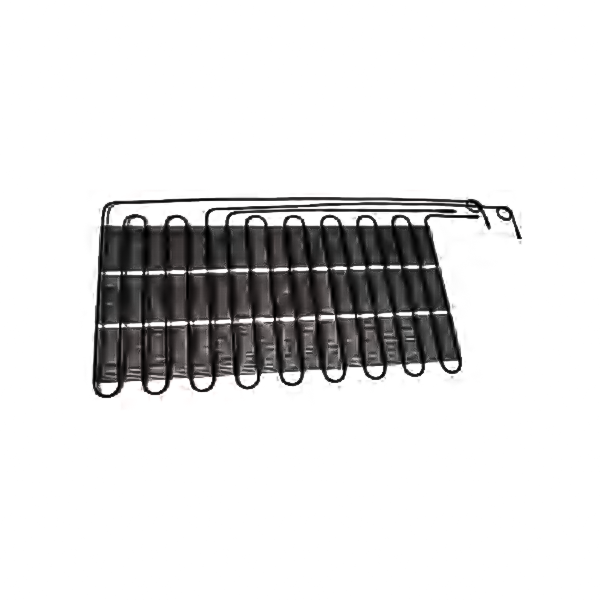 Single-Layer Wire-Tube Condenser for Refrigeration AppliancesA wire-on-tube condenser for refrigerators and freezers, with corrosion-resistant electrophoresis coating and cleanliness suitable for R134a and CFC systems.View Product →
For appliance manufacturers, condensers are often named by construction rather than by cooling medium. A wire-tube condenser uses tubes and wires. A tube-on-plate condenser bonds tubing to a flat plate. A window-blind tube-on-plate design adds louvered openings to the plate. A rotary-wing type uses a different structural arrangement, while an internal condenser is intended to fit inside the appliance or chassis.
The construction affects heat transfer area, airflow behavior, cleaning access, repairability, mounting, and available space. Two condensers with similar face dimensions can behave differently if the tube pitch, wire spacing, plate geometry, or coating is different. That is why a drawing review should include the circuit path and the intended airflow direction, not only the overall width and height.
A tube-on-plate design, for example, can suit a slim installation where a flat surface is useful. The differences between tube-on-plate and wire-tube condenser construction are worth checking before choosing a replacement or starting a new appliance platform.
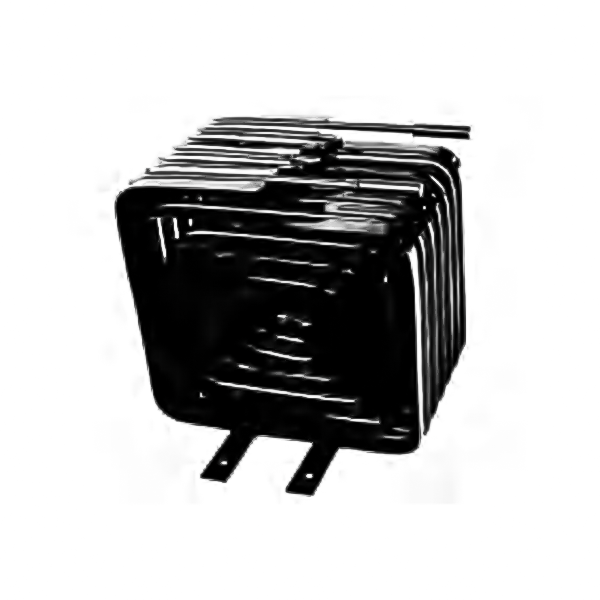 Tube-on-Plate Condenser for Refrigerator and Freezer ApplicationsA slim tube-on-plate condenser for refrigeration appliances, using welded steel tube and SPCC plate with electrophoresis coating for corrosion protection.View Product →
An internal condenser is chosen when the component must sit within the cabinet, behind a panel, or inside a compact chassis. The meaning is still the same heat exchanger, but the installation constraints are tighter. Service access, condensate management, and protection from damage become part of the selection.
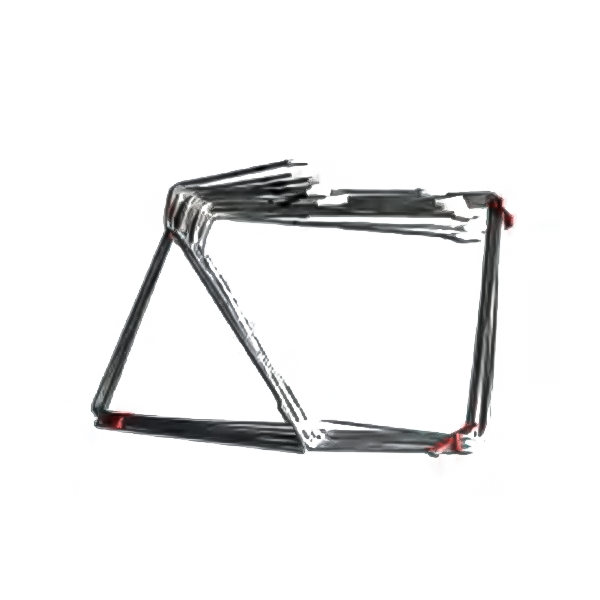 Internal Wire-on-Tube Condenser for Refrigeration CabinetsA flat condenser designed to fit inside refrigerators or freezers, available in galvanized steel or aluminum with PVC or painted surfaces.View Product →
The simplest distinction is heat direction. A condenser rejects heat from the refrigerant to the outside environment. An evaporator absorbs heat into the refrigerant from the space or product being cooled. Both are heat exchangers, but they operate at different pressures and temperatures and are selected for different duties.
In a refrigerator, the evaporator is usually inside the food compartment or behind an inner liner, while the condenser is on the back, under the cabinet, or in a machine compartment. If someone calls every heat exchanger a condenser, the meaning becomes too broad to be useful for specification. In a heat pump, the outdoor coil can change roles depending on the operating mode, so the word “condenser” should be tied to the mode being described.
When a purchase drawing says “condenser,” the practical question is not only what the word means but what the part must do. Confirm the refrigerant, required heat rejection at a stated ambient and airflow, inlet and outlet connections, tube material, surface finish, mounting points, overall envelope, and leak-test requirement. Capacity is not a single fixed number; it depends on the temperature difference between the refrigerant and the cooling medium.
A useful inquiry includes the operating conditions, not just a model number. If the condenser is for a refrigerator, freezer, display cabinet, cooler, or water dispenser, state the expected duty cycle and the available airflow. If the condenser is fan-cooled, include fan position and clearance. If it is passive, include the surrounding panel openings and expected dust level.
A supplier’s quality system matters, but certification alone does not prove thermal performance. ISO 9001 can indicate process control; it does not replace test data, samples, or a clear inspection plan. For condenser sourcing, the strongest evidence is a part that matches the drawing, passes leak and pressure checks, and performs consistently in the intended appliance.
A condenser that looks clean can still be fouled. Dust, lint, grease, and packaging fibers can bridge wire fins or coat plate surfaces. Bent wires or crushed tubes reduce airflow and surface area. In fan-cooled systems, a weak fan motor or a blocked grille can raise condensing pressure even when the coil itself is intact.
Service checks should include airflow, surface condition, fan operation, refrigerant charge, and signs of non-condensable gas in the system. Cleaning methods must match the construction. High-pressure water can damage delicate fins or push dirt deeper into a coil. For passive wire-tube condensers, regular dust removal and keeping the rear clearance open often matter more than aggressive cleaning.
If the condenser is replaced, match the circuit path and connection positions, not only the outside dimensions. A replacement that is slightly smaller may fit physically but raise discharge pressure. A replacement with a different tube volume may change refrigerant charge and subcooling. Those are performance issues, not installation details.
The practical meaning of condenser is therefore straightforward: it is the heat exchanger that turns high-pressure refrigerant vapor back into liquid by rejecting heat. In appliance work, that definition should always be read together with construction, airflow, refrigerant, and installation constraints. When those details are clear, the word stops being ambiguous and becomes a usable specification.
Your email address will not be published. Required field are marked*

No.380 Kangyang Rd in the north,HuangdaiTown,Xiangcheng District,Suzhou City,215143

0512-65481378


