



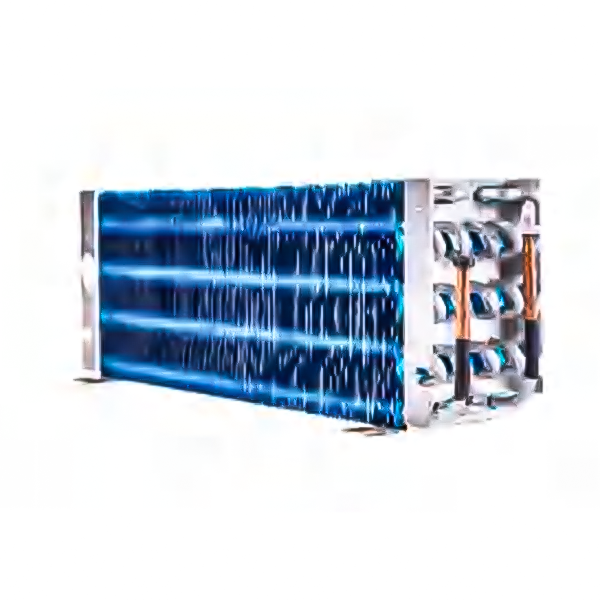
Aluminum tube fin type evaporators represent a significant advancement in heat exchange technology, offering superior thermal efficiency, reduced weight, and enhanced corrosion resistance compared to traditional copper-aluminum assemblies. By utilizing pure aluminum for both tubes and fins, these units eliminate galvanic corrosion risks while lowering manufacturing costs and environmental impact.
Content
The shift from copper tubes with aluminum fins to all-aluminum designs is driven by several critical performance and economic factors. Understanding these benefits helps engineers and procurement specialists make informed decisions for HVAC and refrigeration systems.
Aluminum has a density approximately one-third that of copper. Replacing copper tubes with aluminum can reduce the overall weight of the evaporator coil by up to 40-50%. This reduction is crucial for automotive air conditioning systems, where every kilogram saved contributes to improved fuel efficiency and lower emissions.
In traditional coils, the junction between copper tubes and aluminum fins creates a galvanic cell when exposed to moisture, leading to rapid corrosion at the bond points. All-aluminum designs remove this dissimilar metal contact entirely. This uniform material composition significantly extends the operational lifespan of the unit, particularly in humid or coastal environments where salt spray accelerates degradation.
While copper has higher intrinsic thermal conductivity than aluminum, modern engineering techniques have allowed aluminum tube fin evaporators to match or exceed the performance of traditional coils. This is achieved through optimized geometries and advanced manufacturing processes.
Aluminum’s malleability allows for the creation of complex fin shapes and micro-channel tubes that maximize surface area contact with the air. Micro-channel aluminum tubes can increase heat transfer efficiency by 15-20% compared to standard round copper tubes due to their multi-port design which improves refrigerant distribution.
The internal volume of aluminum micro-channel tubes is significantly smaller than that of copper tubes. This reduction in internal volume means less refrigerant is required to fill the system. Systems using aluminum tube fin evaporators often require 30-50% less refrigerant charge, which lowers costs and reduces the environmental impact associated with refrigerant leaks.
The economic case for aluminum tube fin evaporators is strong, driven by raw material prices and manufacturing scalability. Copper prices are historically volatile and generally higher than aluminum, making aluminum a more stable and cost-effective choice for mass production.
| Factor | All-Aluminum | Copper Tube/Al Fin |
|---|---|---|
| Raw Material Cost | Lower (Stable) | Higher (Volatile) |
| Manufacturing Process | Mechanical Expansion/Brazing | Mechanical Expansion |
| Recyclability | High (Single Material) | Complex (Separation Required) |
| Weight | Lightweight | Heavier |
Furthermore, the recyclability of all-aluminum units is superior. Since the entire coil is made of a single material, it can be recycled without the need for expensive and energy-intensive separation processes required for copper-aluminum composites.
Despite their advantages, aluminum tube fin evaporators present specific engineering challenges that must be addressed during design and installation.
Aluminum cannot be soldered like copper. Instead, manufacturers use brazing or mechanical expansion techniques. Nocolok brazing, which uses a non-corrosive flux, is the industry standard for creating leak-proof joints in aluminum coils. This process requires precise temperature control to ensure strong bonds without compromising the material’s integrity.
Aluminum has lower tensile strength than copper, which can limit its use in high-pressure refrigerant systems. However, advancements in alloy compositions and tube wall thickness optimization have enabled aluminum coils to handle pressures common in R-410A and R-32 systems. For ultra-high-pressure applications like CO2 refrigeration, specialized thick-walled aluminum designs are now available.
The versatility of aluminum tube fin type evaporators has led to their adoption in a wide range of sectors. Their lightweight and efficient characteristics make them ideal for mobile and space-constrained applications.
This is the largest market for aluminum evaporators. The weight savings directly contribute to vehicle fuel economy, while the compact size allows for easier integration into modern dashboard designs. Over 90% of new passenger vehicles now use aluminum-based evaporator cores.
In supermarket display cases and cold storage units, the corrosion resistance of aluminum is highly valued. These environments often involve frequent washdowns and exposure to various food acids, conditions where traditional copper coils might fail prematurely.
As energy efficiency standards tighten globally, residential HVAC manufacturers are increasingly adopting aluminum coil technology. The improved heat transfer and lower refrigerant charge help units meet stringent SEER (Seasonal Energy Efficiency Ratio) ratings.
Your email address will not be published. Required field are marked*

No.380 Kangyang Rd in the north,HuangdaiTown,Xiangcheng District,Suzhou City,215143

0512-65481378

 English
 中文简体
中文简体
