



Wire tube evaporators are the preferred choice for static cooling applications due to their superior heat transfer efficiency and robust mechanical design. By welding steel wires perpendicular to the refrigerant tubes, these units increase the surface area for heat exchange by up to 30% compared to bare tube models. This configuration promotes natural convection, ensuring uniform temperature distribution in freezers and display cabinets while minimizing frost buildup through efficient thermal conductivity.
Content
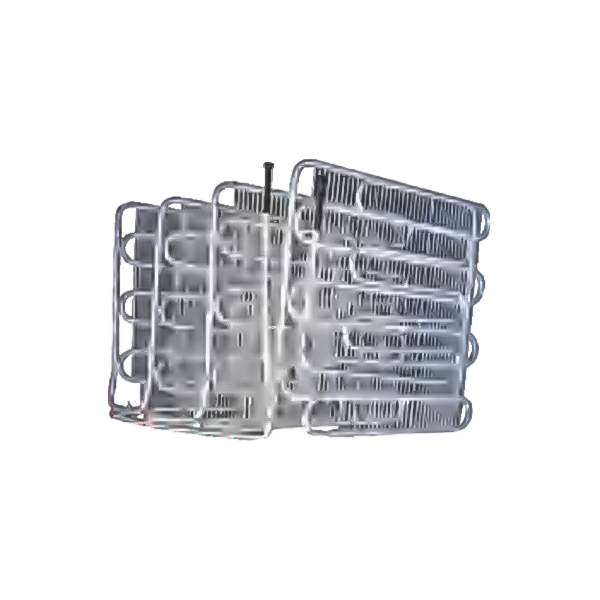
The core advantage of a wire tube evaporator lies in its composite structure. Unlike plate or finned evaporators, the wire tube design uses high-carbon steel wires spot-welded to both sides of the main refrigerant tubing. This creates a rigid grid that acts as an extended surface area for heat absorption.
The wires serve as fins, significantly increasing the contact area with the surrounding air. In a typical unit, the wire surface area can account for 60-70% of the total heat exchange surface. This allows the refrigerant inside the tubes to absorb heat more rapidly from the cabinet interior, reducing compressor run time and energy consumption.
Wire tube evaporators are designed for static cooling, relying on natural air circulation rather than fans. The spacing between wires is optimized to allow air to flow freely without significant resistance. This prevents cold spots and ensures consistent temperatures throughout the storage volume, which is critical for preserving the quality of frozen goods.
| Feature | Wire Tube | Plate | Finned Tube |
|---|---|---|---|
| Heat Transfer Efficiency | High | Moderate | Very High (with fan) |
| Airflow Resistance | Low | None | High |
| Durability | Excellent | Good | Moderate |
| Cost | Moderate | Low | High |
The longevity of a wire tube evaporator depends heavily on the materials used and the protective coatings applied. These components operate in humid, low-temperature environments prone to condensation and corrosion.
Most wire tube evaporators use carbon steel for both the tubes and wires due to its high thermal conductivity and structural strength. The tubes typically have a diameter of 6-8 mm, while the wires range from 3-5 mm in thickness. To prevent rust, manufacturers apply various coatings:
The wires are attached to the tubes using resistance welding. This process creates a metallurgical bond that ensures efficient heat transfer from the wire to the tube. Poor welding can lead to thermal resistance, reducing the evaporator's overall efficiency. High-quality units undergo rigorous pressure testing to ensure no leaks exist at the weld points.
Frost accumulation is inevitable in evaporators operating below freezing. Effective defrosting is crucial to maintain performance and prevent blockage of airflow.
In many domestic freezers, wire tube evaporators rely on natural defrost cycles. When the compressor stops, the temperature of the coils rises slightly, melting the frost. The open structure of the wire tube design allows melted water to drain easily, preventing ice buildup. This method is energy-efficient but requires careful management of door openings to limit moisture ingress.
For commercial applications or humid environments, electric defrost heaters are installed near the evaporator. These heaters activate periodically to melt frost quickly. Wire tube evaporators respond well to electric defrost because the steel wires conduct heat rapidly, distributing it evenly across the surface. This reduces defrost time by 20-30% compared to plate evaporators.
Wire tube evaporators are versatile components used in a wide range of refrigeration equipment. Their design makes them particularly suitable for applications requiring quiet operation and uniform cooling.
In household appliances, wire tube evaporators are often mounted on the interior walls or ceiling of the freezer compartment. Their slim profile maximizes storage space, while their quiet operation enhances user comfort. They are commonly found in chest freezers, upright freezers, and combination fridge-freezers.
Retail display cases for ice cream, frozen foods, and beverages frequently use wire tube evaporators. The open wire structure allows customers to see the products clearly without obstruction. Additionally, the robust construction withstands frequent cleaning and handling in busy retail environments.
Large-scale cold rooms and walk-in freezers utilize industrial-grade wire tube evaporators. These units are designed for heavy-duty operation, often featuring thicker tubes and wires to handle higher pressures and larger volumes. Modular designs allow for easy expansion, enabling customization to fit specific room dimensions and cooling loads.
Your email address will not be published. Required field are marked*

No.380 Kangyang Rd in the north,HuangdaiTown,Xiangcheng District,Suzhou City,215143

0512-65481378

 English
 中文简体
中文简体
