


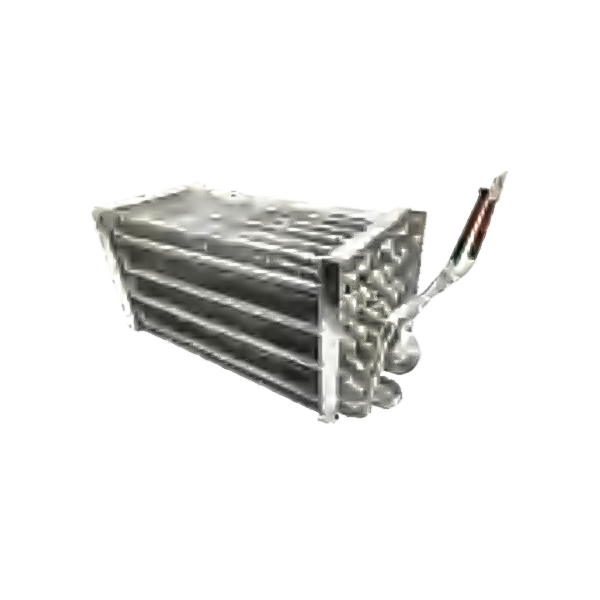
Aluminum tube fin type evaporators represent the industry standard for efficient heat exchange in commercial refrigeration and air conditioning systems. By combining the high thermal conductivity of aluminum with an expanded surface area provided by fins, these units maximize heat absorption while minimizing weight and material costs. The efficiency of an aluminum tube fin evaporator is primarily driven by the quality of the mechanical bond between the tube and the fin, as well as the optimization of airflow dynamics across the coil. Proper selection involves balancing fin density, tube diameter, and circuiting design to match the specific thermal load and operating temperature of the application.
Content
The fundamental design of an aluminum tube fin evaporator relies on the principle of extended surface heat transfer. The internal refrigerant absorbs heat from the surrounding air, which is forced over the external fins by fans.
The thermal resistance at the interface between the tube and the fin is the critical bottleneck in heat transfer. Modern manufacturing utilizes mechanical expansion, where the aluminum tube is hydraulically or pneumatically expanded against the fin collar. This creates a tight interference fit that ensures efficient heat conduction. Advanced techniques may also involve epoxy bonding or hydrophilic coatings to further reduce contact resistance and improve condensate drainage. A poor bond can result in a 10-15% reduction in overall heat transfer efficiency.
Fins are typically stamped from aluminum sheets with thicknesses ranging from 0.10 mm to 0.15 mm. The fin pitch, or the number of fins per inch (FPI), determines the surface area available for heat exchange. Higher FPI increases capacity but also increases airside pressure drop, requiring more powerful fans. For low-temperature applications, wider fin spacing (e.g., 6-8 FPI) is preferred to prevent frost buildup from blocking airflow, whereas high-temperature air conditioning units may use 12-15 FPI.
Aluminum is the dominant material for both tubes and fins in modern evaporators due to its favorable physical and economic properties. However, its susceptibility to corrosion in certain environments requires careful consideration.
| Material | Thermal Conductivity (W/m·K) | Weight | Corrosion Resistance | Cost |
|---|---|---|---|---|
| Aluminum (All-Alu) | ~237 | Light | Moderate (Requires Coating) | Low |
| Copper Tube / Al Fin | ~401 (Tube) | Heavy | High | High |
| Stainless Steel | ~16 | Heavy | Very High | Very High |
While copper has higher thermal conductivity, aluminum’s lightweight nature and lower cost make it ideal for large-scale applications. To mitigate corrosion, especially in coastal or industrial environments, manufacturers apply hydrophilic epoxy or gold coatings to the aluminum fins. These coatings not only protect against oxidation but also help water sheet off the fins rather than forming droplets that block airflow.
In low-temperature applications, frost accumulation on the fins acts as an insulator, drastically reducing heat transfer. Effective defrosting is essential for maintaining the performance of aluminum tube fin evaporators.
Hot gas defrost redirects high-pressure, high-temperature discharge gas from the compressor directly into the evaporator. This method is highly efficient and rapid, typically completing a cycle in 20-30 minutes. It minimizes temperature fluctuation in the cold room and reduces energy consumption compared to electric defrost methods. However, it requires complex piping and control valves.
Electric defrost uses heating elements installed beneath or within the coil. While simpler to install, it is energy-intensive and can cause significant temperature spikes in the conditioned space. Water defrost, spraying warm water over the coil, is effective for large industrial units but requires a water supply and drainage system. The choice of defrost method impacts the overall coefficient of performance (COP) of the refrigeration system.
Regular maintenance is crucial to extend the lifespan of aluminum tube fin evaporators and ensure consistent cooling performance. Neglect can lead to reduced efficiency and costly repairs.
Your email address will not be published. Required field are marked*

No.380 Kangyang Rd in the north,HuangdaiTown,Xiangcheng District,Suzhou City,215143

0512-65481378

 English
 中文简体
中文简体
