



Wire tube evaporators remain the most cost-effective and durable solution for static cooling in commercial refrigeration. Their superior mechanical strength and efficient natural convection design make them ideal for chest freezers, display cabinets, and cold rooms where reliability outweighs the need for compact aesthetics. The key to their performance lies in the high surface area provided by the welded wire grid, which facilitates robust heat exchange without the complexity of fan-assisted systems.
Unlike plate or finned-tube evaporators, wire tube models are less prone to physical damage and easier to clean. This makes them the preferred choice for environments where hygiene and longevity are critical. Understanding their construction and operational limits allows engineers to optimize system efficiency and reduce long-term maintenance costs.
Content
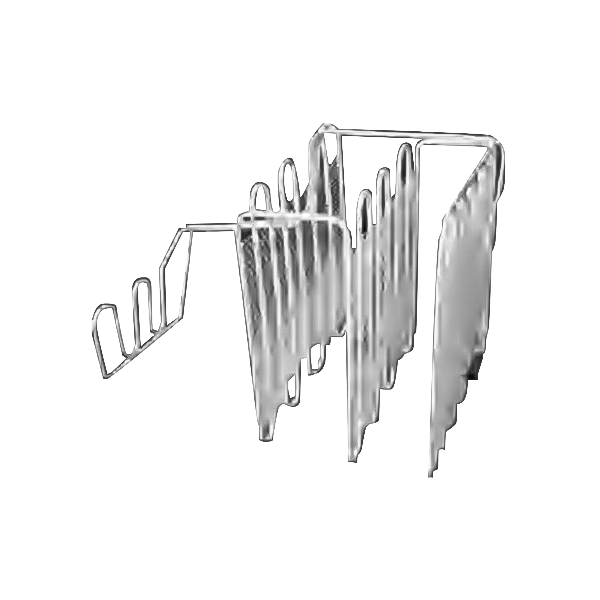
The core structure of a wire tube evaporator consists of parallel steel or copper tubes connected by a grid of low-carbon steel wires. These wires are not merely structural supports; they act as extended surfaces (fins) that significantly increase the heat transfer area. The wires are typically welded to the tubes using resistance welding, ensuring a strong thermal bond that minimizes contact resistance.
The choice of material directly impacts the evaporator's lifespan and application. Steel tubes with steel wires are standard for low-temperature applications using hydrocarbons or HFC refrigerants. For corrosive environments or systems using ammonia, stainless steel variants are required. Copper tubes offer superior thermal conductivity but are softer and more expensive, limiting their use to specific high-efficiency requirements.
Wire tube evaporators rely on natural convection. As air cools near the tubes, it becomes denser and sinks, drawing warmer air up through the wire grid. The spacing between wires is critical; too close, and airflow is restricted by frost buildup; too far, and heat transfer surface area is reduced. Optimal wire spacing typically ranges from 4mm to 7mm, balancing airflow permeability with thermal exchange capacity.
Frost accumulation is the primary enemy of evaporator efficiency. In wire tube designs, frost acts as an insulator, reducing heat transfer and blocking airflow. Effective defrosting is therefore essential for maintaining performance. Unlike fan-forced evaporators, wire tube units often utilize passive or semi-passive defrost methods due to their large thermal mass.
| Method | Energy Efficiency | Complexity | Best Application |
|---|---|---|---|
| Off-Cycle | High | Low | Refrigerators (>0°C) |
| Electric Heater | Medium | Medium | Freezers (<0°C) |
| Hot Gas | High | High | Large Industrial Systems |
Regular maintenance of wire tube evaporators is straightforward but vital. The open structure allows for easy cleaning with non-abrasive brushes and mild detergents. Inspecting the weld points for signs of corrosion or fatigue should be part of annual servicing. Ensuring that the evaporator is not obstructed by stored goods is crucial for maintaining proper air circulation and preventing uneven cooling.
Wire tube evaporators are versatile components found in a wide range of refrigeration systems. Their robustness makes them particularly suitable for harsh environments where delicate finned coils might fail. However, their bulkier profile requires careful planning during system integration to ensure adequate clearance for airflow.
When integrating wire tube evaporators, engineers must account for the superheat settings. Due to their large internal volume, these evaporators may require larger charge amounts of refrigerant compared to microchannel alternatives. Proper sizing ensures that the compressor operates efficiently without risking liquid slugging, thereby extending the life of the entire refrigeration cycle.
Your email address will not be published. Required field are marked*

No.380 Kangyang Rd in the north,HuangdaiTown,Xiangcheng District,Suzhou City,215143

0512-65481378

 English
 中文简体
中文简体
