



Content
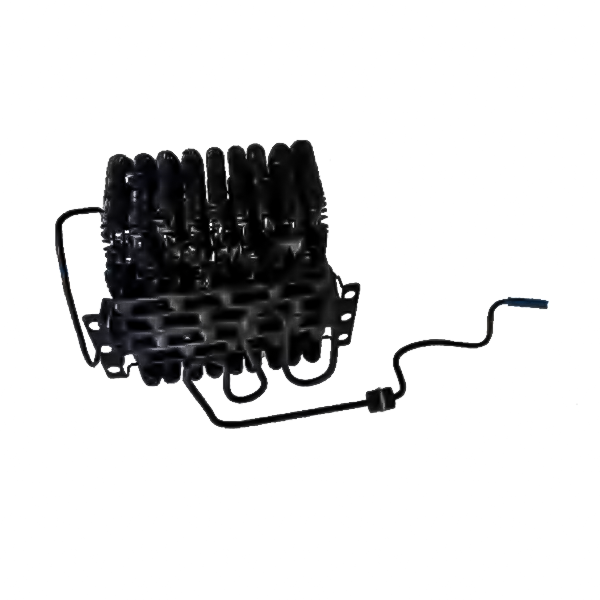
Rotary fin condensers are advanced heat exchange devices designed to maximize thermal efficiency in compact spaces. Unlike traditional static fin-and-tube coils, these systems often incorporate rotating elements or specialized fin geometries that enhance air turbulence and heat dissipation. The primary advantage lies in their ability to maintain high heat transfer coefficients even under low airflow conditions, making them ideal for applications where space is limited or energy efficiency is paramount.
In many industrial contexts, the term "rotary" may refer to the manufacturing process of the fins (spiral winding) or the integration with rotary compressors, but fundamentally, the technology focuses on optimizing the surface area-to-volume ratio. By increasing the contact time between the refrigerant-carrying tubes and the ambient air, these condensers achieve superior cooling performance, reducing the overall load on the compressor and lowering operational costs.
The effectiveness of a rotary fin condenser is dictated by its construction materials and geometric design. Engineers must balance thermal conductivity, structural integrity, and corrosion resistance.
The fins are typically made from aluminum due to its lightweight nature and excellent thermal conductivity. Modern designs use louvered or wavy fin patterns to disrupt laminar airflow, creating turbulence that enhances heat transfer. This turbulence can improve heat exchange efficiency by up to 20% compared to flat fins. The spacing between fins, known as fins per inch (FPI), is carefully calculated to prevent clogging while maximizing surface area.
Inner tubes are commonly constructed from copper or cupronickel alloys. Copper offers superior thermal conductivity, while cupronickel provides exceptional resistance to corrosion in marine or high-humidity environments. The bond between the fin and the tube is critical; mechanical expansion or epoxy bonding ensures minimal thermal resistance at the interface, allowing heat to flow freely from the refrigerant to the air.
| Material | Thermal Conductivity (W/m·K) | Corrosion Resistance | Cost |
|---|---|---|---|
| Aluminum Fins | 205-235 | Moderate (requires coating) | Low |
| Copper Tubes | 385-400 | Good | High |
| Stainless Steel | 15-20 | Excellent | Very High |
Rotary fin condensers are versatile components used across various sectors. Their compact design and high efficiency make them suitable for both residential and heavy-duty industrial applications.
To sustain the high performance of rotary fin condensers, regular maintenance is essential. Dirt, debris, and biological growth can significantly impede airflow and reduce heat transfer efficiency.
Accumulated dust acts as an insulator, forcing the system to work harder. Regular cleaning with low-pressure water or specialized coil cleaners can restore up to 15% of lost efficiency. It is crucial to avoid high-pressure washing, which can bend the delicate aluminum fins and restrict airflow further. Straightening combs should be used to correct any minor fin damage.
Periodic inspections should focus on the brazed joints and tube surfaces. Signs of white powder indicate aluminum corrosion, while green deposits suggest copper leaks. Early detection allows for timely repairs, preventing costly refrigerant loss and compressor failure. In coastal areas, applying epoxy coatings to the coils can extend their lifespan by resisting salt spray corrosion.
As energy regulations become stricter, the development of rotary fin condensers is shifting towards sustainability and smart integration.
Your email address will not be published. Required field are marked*

No.380 Kangyang Rd in the north,HuangdaiTown,Xiangcheng District,Suzhou City,215143

0512-65481378

 English
 中文简体
中文简体
