 English
 中文简体
中文简体Industry News
HOME / BLOG / Industry News / Are Tube On Plate Condensers suitable for high-temperature applications?




Content
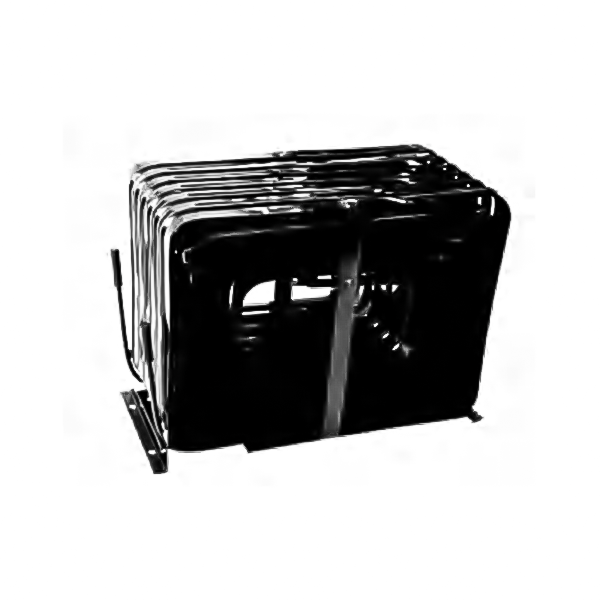
Tube On Plate Condensers are a widely used heat exchange solution in refrigeration and thermal management systems. Their basic structure consists of metal tubes mechanically or metallurgically bonded to flat plates, allowing heat to transfer efficiently from the refrigerant inside the tube to the surrounding air through the plate surface. This design emphasizes simplicity, durability, and stable performance.
When considering high-temperature applications, understanding how this structural design behaves under thermal stress is essential. Unlike finned or microchannel condensers, tube on plate designs distribute heat over a broader surface area, which can help moderate localized temperature peaks under certain operating conditions.
High-temperature applications vary depending on industry context. In refrigeration and HVAC systems, high temperature typically refers to elevated condensing temperatures caused by high ambient air, heavy thermal loads, or system inefficiencies. In industrial heat rejection scenarios, it may also involve higher refrigerant discharge temperatures.
Tube On Plate Condensers are generally designed for moderate to moderately high operating temperatures. Their suitability depends on how well materials, bonding methods, and system design handle prolonged exposure to elevated thermal conditions without compromising performance or safety.
Material choice plays a critical role in determining whether a tube on plate condenser can operate reliably at higher temperatures. Most designs use copper or steel tubes combined with steel or aluminum plates. These materials offer good thermal conductivity and mechanical strength within defined temperature ranges.
Copper tubes perform well under higher refrigerant discharge temperatures, while steel plates provide structural stability. However, prolonged exposure to excessive temperatures can accelerate oxidation, reduce bonding integrity, and increase the risk of material fatigue if the condenser is not specifically designed for such conditions.
At higher temperatures, condenser performance depends on how effectively heat can be dissipated into the surrounding environment. Tube On Plate Condensers rely primarily on natural or forced air convection over flat plate surfaces. As temperatures rise, heat rejection efficiency may decline if airflow is insufficient.
While the flat plate design offers uniform heat spreading, it does not provide the same surface enhancement as finned structures. As a result, tube on plate condensers may require larger surface areas or enhanced airflow to maintain acceptable performance in high-temperature conditions.
High-temperature operation is often associated with higher system pressures. Tube On Plate Condensers are commonly used with standard refrigeration refrigerants and are designed to withstand typical pressure ranges. However, higher condensing temperatures can increase internal pressure, placing additional stress on tube walls and joints.
Compatibility with specific refrigerants is also important. Some modern refrigerants operate at higher pressures and temperatures, which may require reinforced tube thickness, improved welding or brazing techniques, and more robust quality control to ensure long-term reliability.
To evaluate suitability for high-temperature applications, it is useful to compare tube on plate condensers with alternative designs. Each condenser type has inherent strengths and limitations related to thermal performance and temperature tolerance.
| Condenser Type | High-Temperature Suitability | Key Limitation |
| Tube On Plate | Moderate | Lower surface enhancement |
| Finned Tube | High | More complex cleaning |
| Microchannel | High | Sensitive to blockage |
High-temperature applications often involve frequent start-stop cycles and fluctuating loads. Tube On Plate Condensers generally perform well under thermal cycling due to their simple construction and low number of joints compared to more complex designs.
However, repeated expansion and contraction can gradually weaken tube-to-plate bonds if the condenser operates near or beyond its design temperature limits. Proper system sizing and avoiding prolonged operation at extreme temperatures are key to maintaining durability.
Tube On Plate Condensers are well suited for applications where temperatures are elevated but controlled. Examples include domestic refrigeration units operating in warm climates, light commercial refrigeration, and sealed systems with stable airflow conditions.
They are less ideal for environments with extremely high ambient temperatures, limited airflow, or continuous heavy-duty industrial heat rejection demands unless specifically engineered for such use.
Manufacturers can enhance the high-temperature capability of tube on plate condensers through design optimization. Increasing plate surface area, improving tube bonding quality, and using thicker or higher-grade materials can extend operating limits.
From a system perspective, ensuring sufficient airflow, proper condenser placement, and effective heat load management can significantly improve performance without changing the condenser type.
Tube On Plate Condensers can be suitable for certain high-temperature applications, provided that operating conditions remain within their engineered limits. Their simple, robust design offers reliability and ease of maintenance, but they are not inherently optimized for extreme thermal environments.
For applications involving consistently high ambient temperatures or heavy thermal loads, careful evaluation and potential design reinforcement are necessary. When properly selected and applied, tube on plate condensers can deliver stable and dependable performance in moderately high-temperature systems.
Your email address will not be published. Required field are marked*

No.380 Kangyang Rd in the north,HuangdaiTown,Xiangcheng District,Suzhou City,215143

0512-65481378


